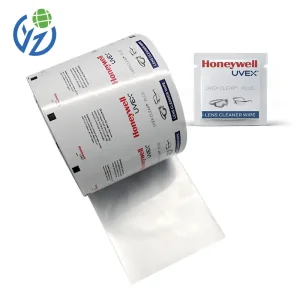
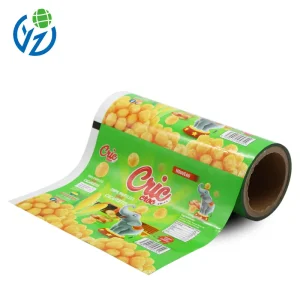
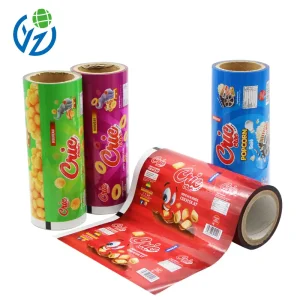
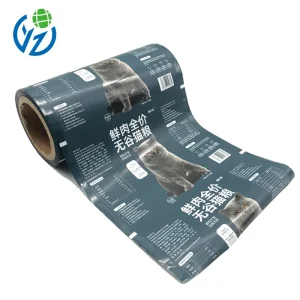
Premium customized barriers, lamination films, and roll stock engineered for automated packaging lines.
Analyzing the operational capabilities of Jieyang Yuanzhong Printing Co., Ltd. within the global packaging value chain.
In the modern global food distribution networks, flexible packaging serves as an essential technological barrier, directly dictating shelf life, product stability, brand positioning, and chemical safety. Operating at the intersection of material science and high-speed manufacturing, Jieyang Yuanzhong Printing Co., Ltd. (established in 2001) has emerged as a premier OEM/ODM manufacturer. Headquartered in Jiedong District, Jieyang City, Guangdong Province, the enterprise maintains structural specialization in food-contact packaging decoration printing and barrier film conversion.
Supported by a manufacturing footprint optimized over two decades, Yuanzhong Printing runs advanced gravure and lamination production setups. Central to this capacity are imported Japanese Komori fully automatic printing lines alongside high-speed solventless and dry composite laminators. These mechanical assets enable the factory to generate a monthly output exceeding 240 metric tons of high-performance composite films and bags. The factory supplies complex technical solutions to packaging operations in more than 30 countries globally, meeting various local compliance requirements.
The global food packing cover printing market is undergoing a major technological transition. Key drivers include tightening regulations on Single-Use Plastics (SUPs) and growing consumer preference for functional, eco-friendly packages. Historically, multi-layer, multi-material laminates (e.g., PET/AL/PE) provided the gas and moisture protection required for high-barrier food preservation. However, sorting and recycling facilities cannot easily process these complex mixed-material layers.
Consequently, the current R&D focus has shifted toward high-barrier monomaterial laminates (primarily All-PE or All-PP structures) and compostable paper-based coatings. Maintaining gas transmission rates below 1.0 cc/m²/day and moisture transmission rates below 1.0 g/m²/day on thin monomaterial films requires advanced lacquer coatings, metalized coatings (MET-PET), and precise gravure tension control to prevent thermal stretching. This structural shift shapes our current technological roadmap and hardware configuration strategies.
A step-by-step breakdown of high-precision packaging conversions, highlighting quality check gates.
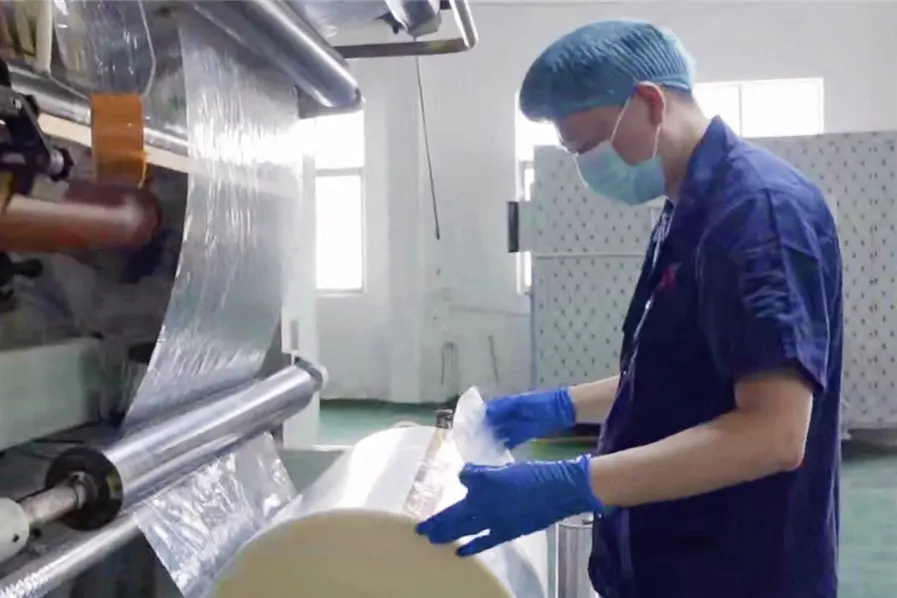
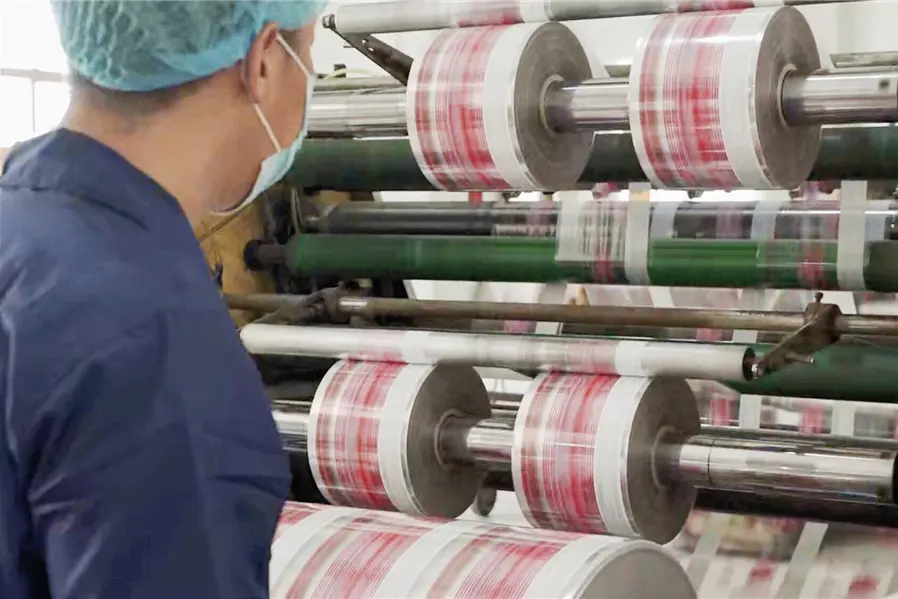
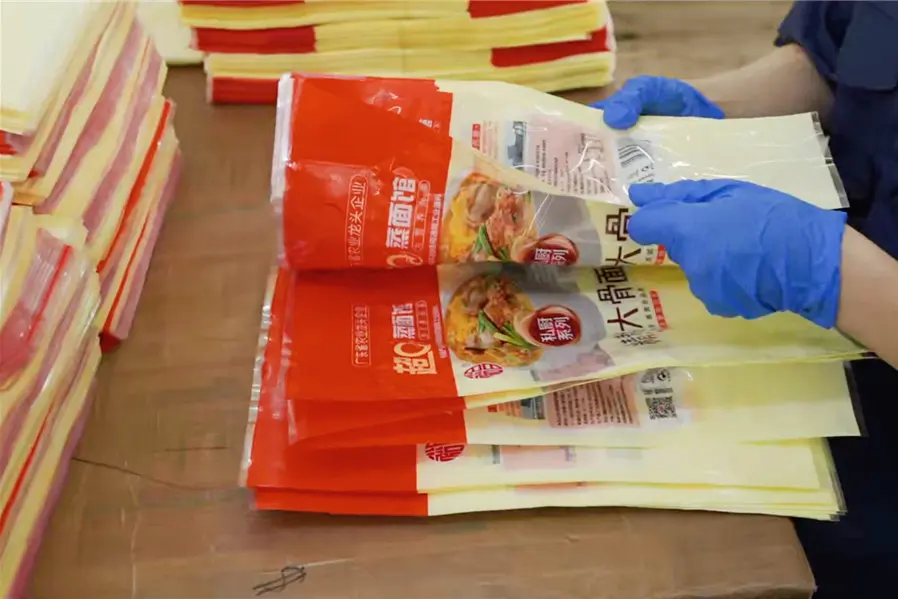
Gravure printing is the industry standard for high-volume flexible food packaging due to its dense ink application, rich color saturation, and excellent run-to-run consistency. Yuanzhong Packing operates a continuous manufacturing model built on five key process stages:
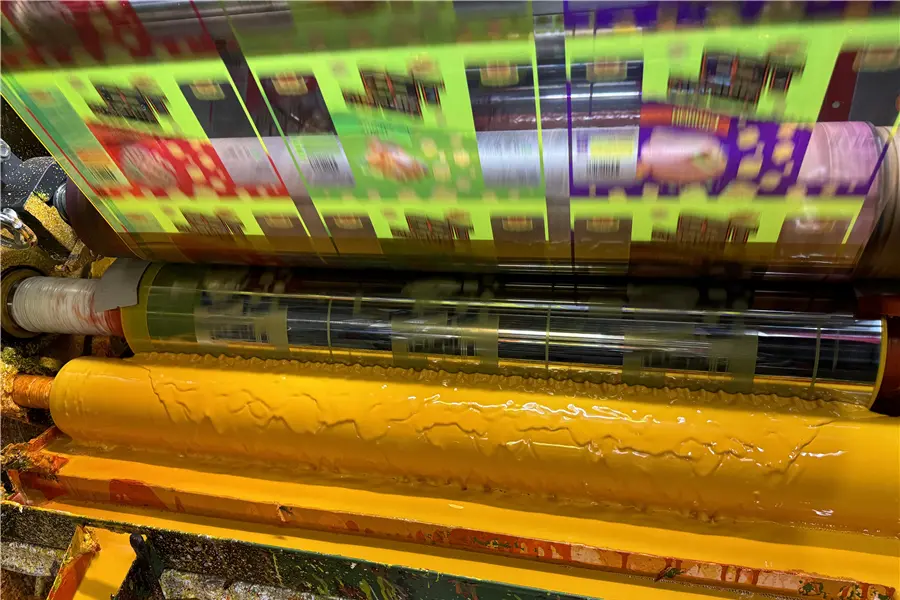
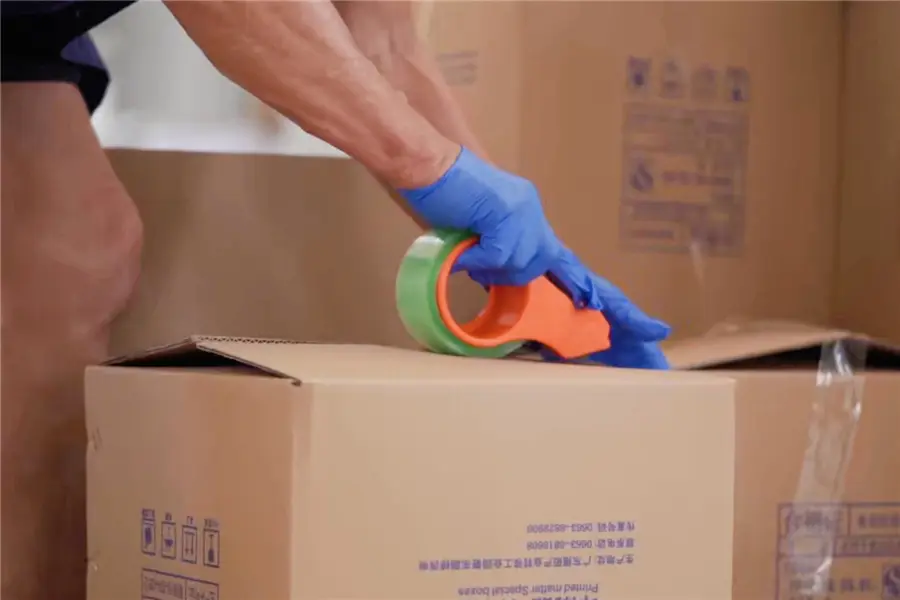
Using steel cylinders with chemically etched cells to transfer low-viscosity, food-grade solvent inks directly onto web substrates. This method delivers sharp fine-text reproduction, consistent color matching across runs, and supports running speeds up to 300 meters per minute.
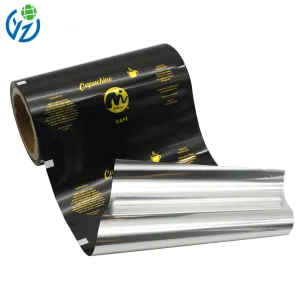
Combines custom films (PET, BOPP, VMPET, PE, CPP) using solvent-free polyurethane adhesives. This design prevents chemical migration and creates customized barrier profiles (oxygen, moisture, UV, aroma) to suit specific food application requirements.
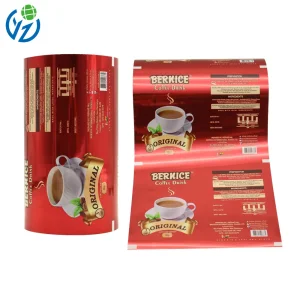
Slitting systems trim wide master rolls to specific dimensions for packaging equipment. High-speed pouch-making machines then form finished structures (stand-up, side-gusset, quad-seal, or spouted formats) with clean thermal seals.
Reviewing functional film selections optimized for specific regional markets and consumer profiles.
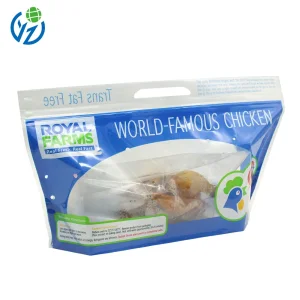
Modern packaging designs must balance product preservation requirements with consumer handling patterns. In the North American and European markets, convenience-driven features like resealable zipper closures, tear notches, and stand-up pouch bases are standard requirements. These designs must also maintain high barrier properties (OTR < 1.5 cc/m²/24h) to survive extended global supply chains.
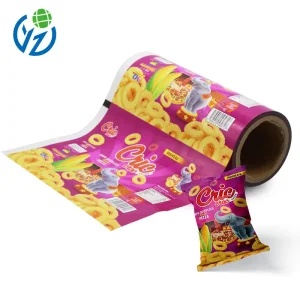
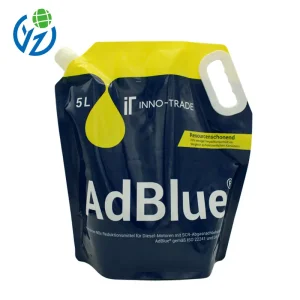
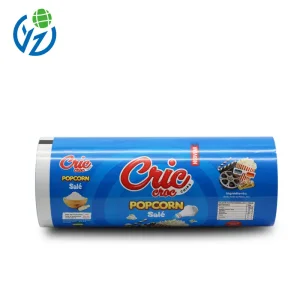
For example, snack and dry food packaging relies on co-extruded BOPP/VMPET/PE laminates. The vacuum-metalized inner layer blocks light and moisture, preventing lipid oxidation in oil-rich foods like nuts and potato chips. In the beverage and liquid sectors, packaging structures must resist mechanical drop stress and prevent leaking around spout attachments, requiring tough nylon (PA) layers laminated to cast polypropylene (CPP) sealing plies.
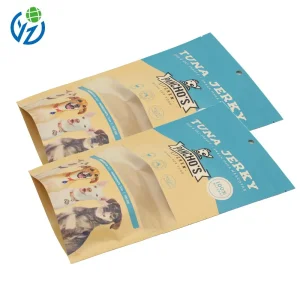
Pet food and animal nutrition packaging requires high grease resistance to prevent lipid migration through outer print layers. This challenge is addressed by using co-polymer resin systems that maintain mechanical strength and seal integrity even when exposed to raw fats and oil formulations.
Showcasing our international presence across ten countries and validation by twenty cooperative brands.
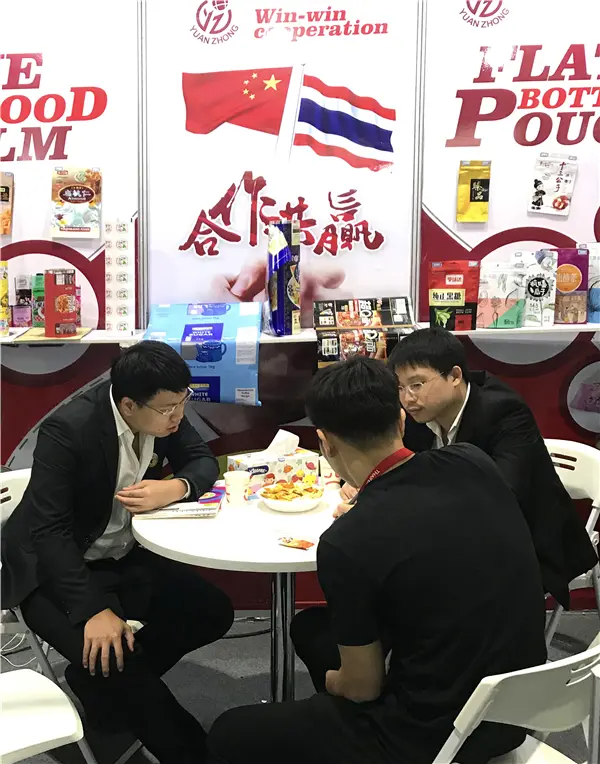
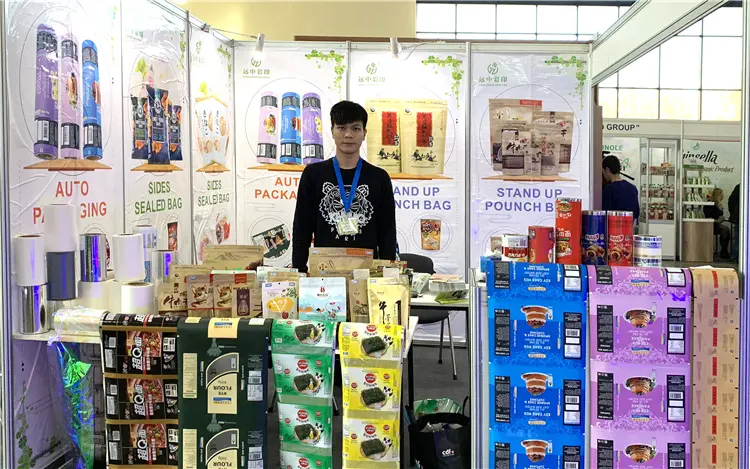
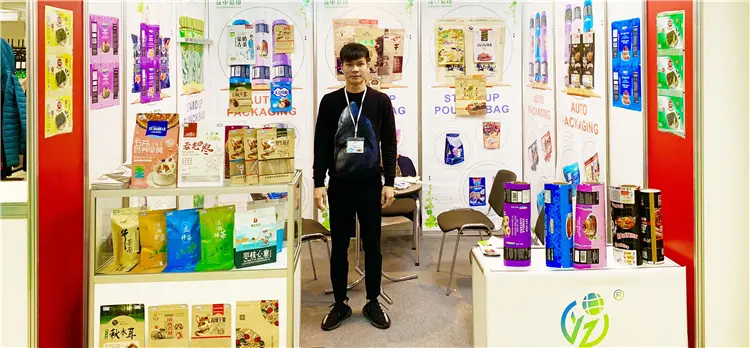
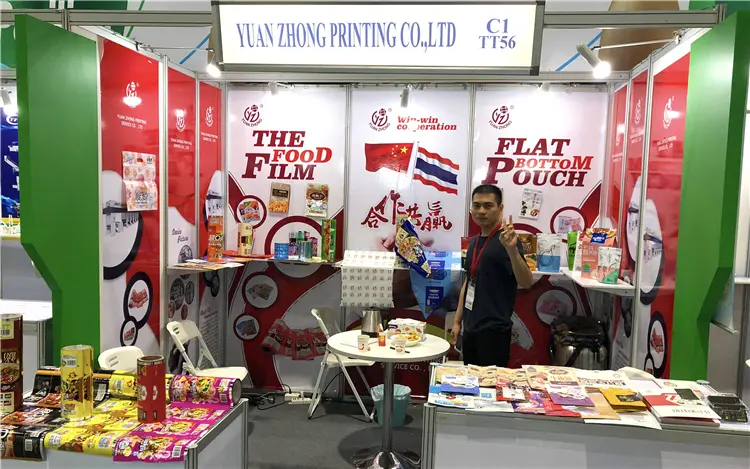
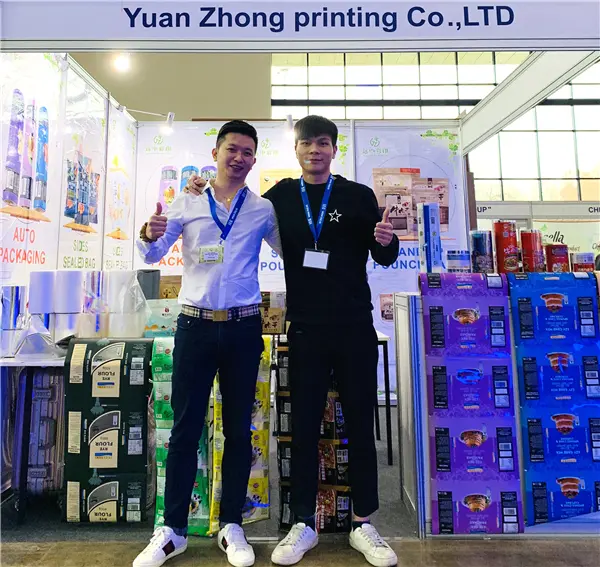
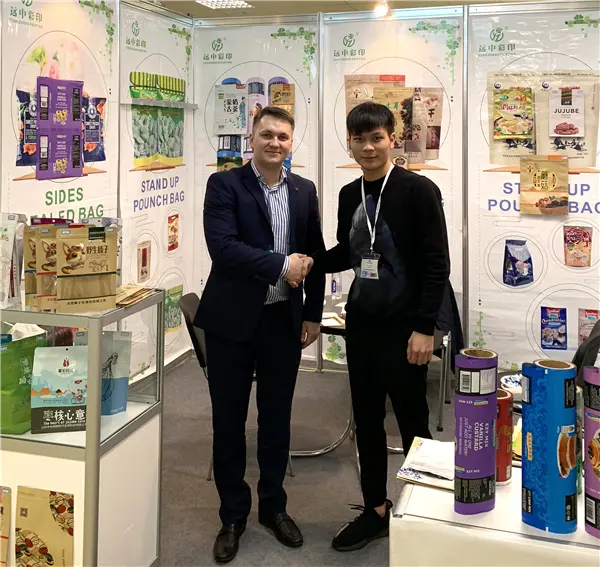
Collaborating with global brands to deliver food-safe, high-performance packaging systems.


Looking ahead at next-generation flexible food barrier systems through 2030.
The transition toward circular economies requires packaging to evolve from a simple passive container into a functional component of the food preservation and sorting loop. Yuanzhong's technology development path focuses on three key areas:
Typical multilayer constructions use incompatible resins (like PET and PE) that complicate recycling. Our current research centers on developing high-barrier PP-based and PE-based laminates. By combining MDO-PE (Machine Direction Oriented Polyethylene) with high-barrier EVOH-copolymer thin-skin layers, we produce materials that can be recycled in standard PE streams while maintaining oxygen and water vapor protection.
To reduce material waste during start-up, we are integrating automated optical camera inspection units directly into our gravure printing lines. These systems detect microscopic surface blemishes, solvent retention, and color registration shifts in real time. They communicate with tension-control systems to make micro-adjustments at running speeds up to 300m/min.
Tomorrow's packaging covers will actively help extend shelf life. We are testing moisture-scavenging inner films and oxygen-absorbing polymers. These additives are co-extruded directly into food-contact PE layers to limit head-space gas degradation, extending the freshness window without relying on artificial chemical preservatives.
Technical guidance from our quality assurance team and polymer chemists.
Explore our secondary line of specialized flexible packaging formats and barrier materials.
 Yuanzhong Printing