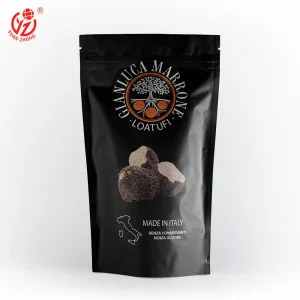
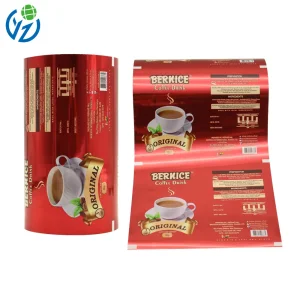
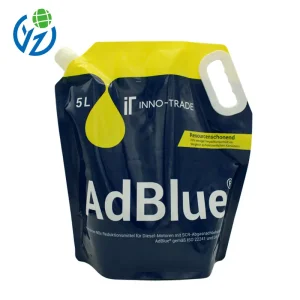
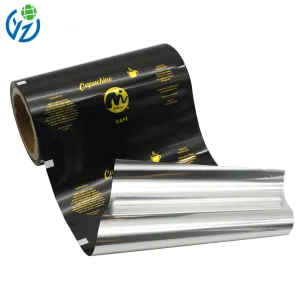
Engineered with multi-layered high-barrier laminates for optimal freshness preservation and structural stability.
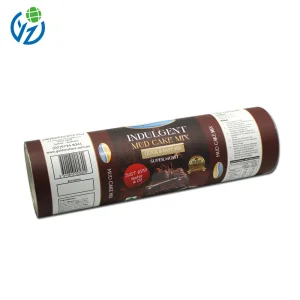
The flexible packaging landscape has undergone a major paradigm shift. Traditional rigid canisters, glass bottles, and corrugated boxes are rapidly being replaced by high-performance multi-layered pouches. Among these, the Flat Bottom Bag (also known as the box pouch, block bottom pouch, or 3D pouch) represents the absolute pinnacle of engineering in bag design. Characterized by its five distinct graphic display panels and a completely flat rectangular base, this packaging architecture combines the physical presence and volumetric stability of a rigid box with the raw efficiency, carbon footprint mitigation, and physical adaptability of a flexible film bag.
On a global industrial level, the market size for flat bottom pouches has experienced robust compound annual growth rates (CAGR). This expansion is driven by consumer package goods (CPG) companies seeking to maximize shelf space utilization, lower outbound transportation overhead, and provide enhanced barrier performance against degradation factors such as oxygen penetration, moisture ingress, ultraviolet radiation, and physical deformation. Modern food supply chains, pharmaceutical pipelines, and industrial chemical distributors depend on flat bottom packaging to secure products across vast continental distribution networks. By eliminating dead space within secondary shipping cartons, flat bottomed designs allow manufacturers to fit up to 30% more volume on standard transport pallets compared to traditional Doypack pouches, directly addressing the global logistics challenge and improving supply chain sustainability.
"The flat bottomed format is no longer just a premium retail option; it has become an industrial benchmark for material optimization and brand authority, minimizing raw plastic usage while delivering structural strength on shelf."
Simultaneously, changing environmental regulations in regions like the European Union and North America are forcing a transformation in the polymer structures used to manufacture these bags. Traditional structures relied heavily on multi-material laminates—such as PET/Aluminium Foil/PE—which offer outstanding barrier properties but are notoriously difficult to recycle. Leading manufacturers are now pivoting toward advanced, recyclable mono-material platforms (like MDO-PE/PE and PP/PP laminates) that incorporate EVOH coatings. This allows companies to maintain an oxygen barrier of less than 0.5 cc/m²/day and a water vapor transmission rate (WVTR) below 0.5 g/m²/day while still remaining compatible with standard recycling waste streams.
Established in 2001 in the Jiedong District of Jieyang City, Guangdong Province, China, Jieyang Yuanzhong Printing Co., Ltd. has established itself as an authoritative leader in the flexible packaging and decorative printing industries. For over two decades, the company has combined advanced materials science, high-precision engineering, and massive production capacity to serve customers in more than 30 countries. Operating as a premier private enterprise, our mission is to deliver tailor-made flexible packaging solutions that combine visual shelf appeal with protective barriers to extend product shelf life.
At Yuanzhong Pack, our competitive edge lies in our state-of-the-art facilities, which house high-speed production systems, including the world-class Japan Komori fully automatic printing lines alongside advanced multi-color gravure presses. This production setup allows us to reach a monthly output of over 240 tons of finished film roll stock and specialized pouches. By controlling the entire manufacturing workflow—from substrate extrusion, high-precision metallization, and multi-ply dry lamination to precise slitting and bag-making—we ensure that every packaging solution meets strict international standards for food safety, chemical resistance, and physical durability.
Our facility is designed around a commitment to customer customization. We understand that a custom flat-bottom bag is a complex product: it requires careful calibration of laminate thickness, coefficient of friction (COF), tensile strength, and heat-seal threshold temperatures. Whether our clients require high-speed form-fill-seal (FFS) roll stock for automated packaging or pre-made flat bottom pouches with zip-locks, gas-release valves, and easy-tear notches, our engineers work alongside them to tailor each parameter to the product’s unique mechanical and chemical requirements.
Producing highly reliable flat bottom bags requires precise control over each phase of production. We utilize gravure printing technology, which is widely recognized in the packaging industry for its thick ink deposition, vibrant color saturation, exceptional plate durability, and stable output during long print runs. Our production process consists of five distinct, interconnected steps:
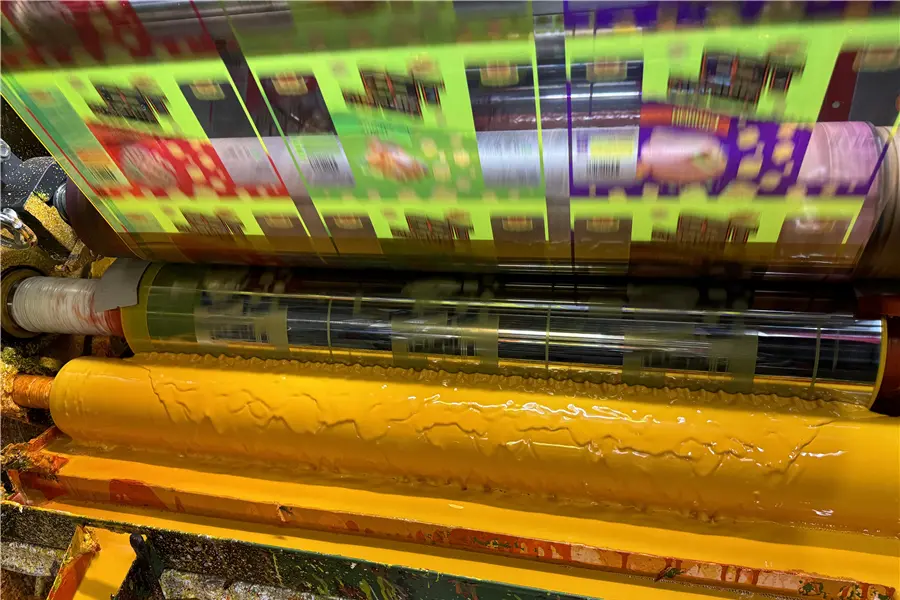
High-speed multi-color gravure systems transfer food-safe inks to the outer structural film.
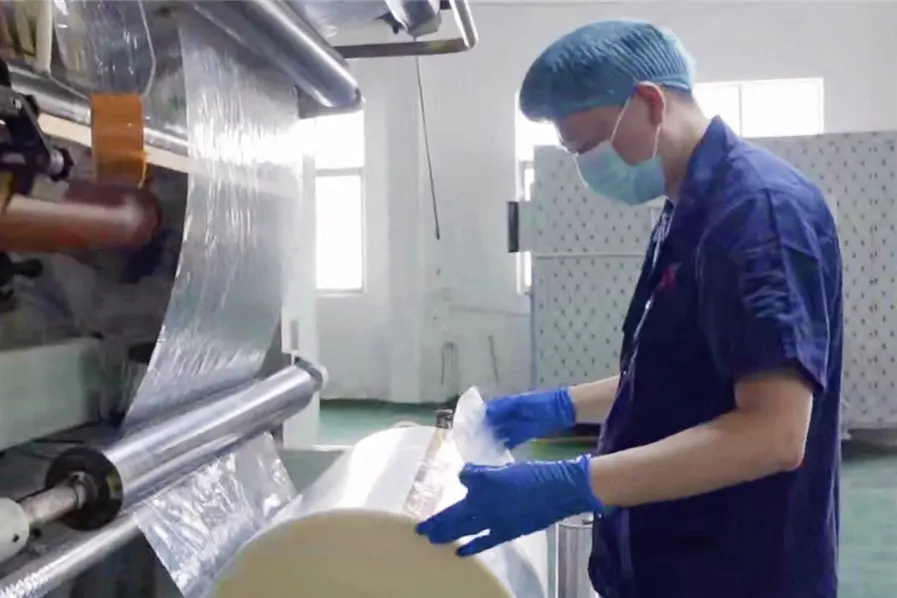
Adhesive application bonds structural, barrier, and sealant layers into a composite structure.
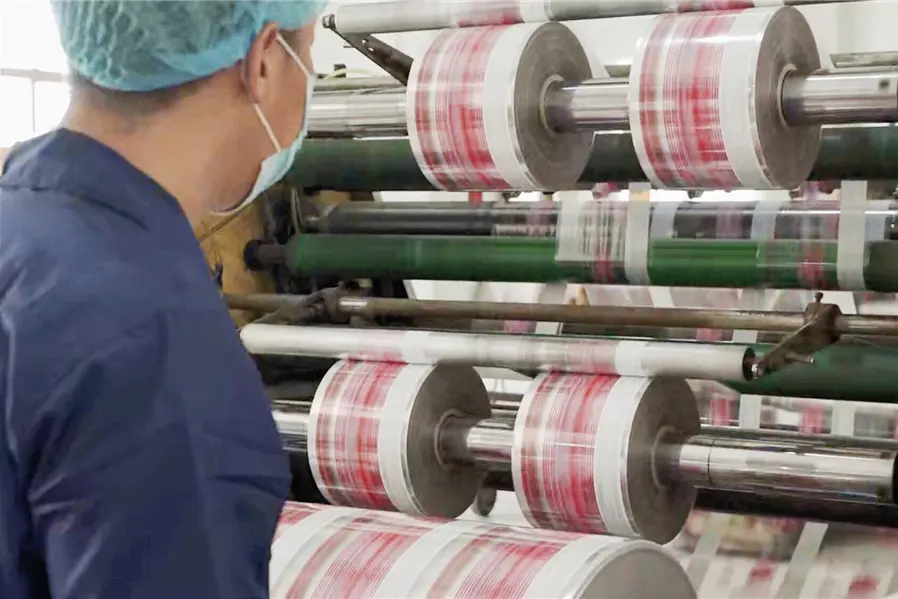
Wide master rolls are slit with high-precision rotary blades to final product width tolerances.
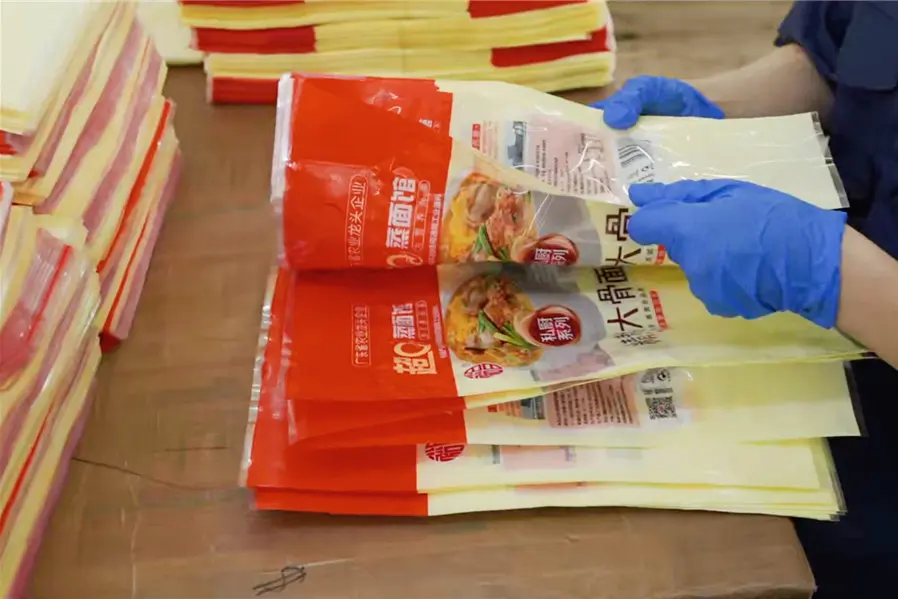
Precision folding and thermal sealing form the side gussets, flat bottom, and closures.
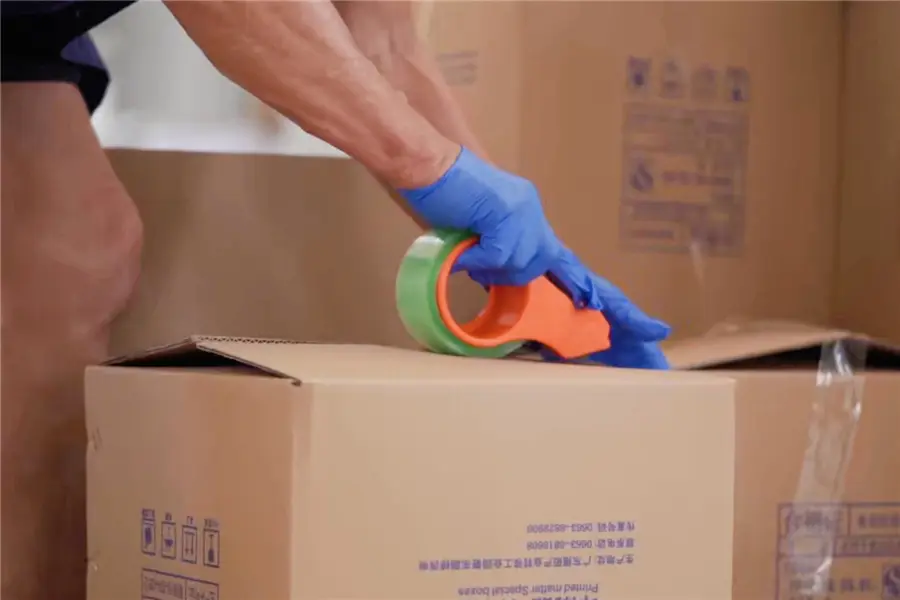
Finished pouches undergo seal integrity testing, are packed into cartons, and palletized.
To ensure complete safety, particularly for food-contact applications, our lamination process is strictly controlled to prevent chemical migration. We use high-grade, solvent-free adhesives and carry out thermal curing in temperature-controlled rooms. This facilitates polymer cross-linking, eliminating residual odors and ensuring that the final laminate meets global regulatory standards.
Choosing the right material combination is essential for optimizing flat bottom packaging. Depending on the physical and chemical characteristics of your product (such as moisture levels, oil content, and susceptibility to oxidation), our technical team will help you select the ideal polymer laminate.
Laminate Structure: 12μm PET || 7μm Aluminium Foil || 60-120μm LLDPE.
Performance Profile: Provides near-zero OTR and WVTR. The aluminum foil core layer forms an absolute physical barrier, protecting sensitive products like roasted coffee beans, premium chocolates, and chemical reagents from light, oxygen, and moisture.
Laminate Structure: 12μm PET || 12μm VMPET || 60-100μm LLDPE.
Performance Profile: A cost-effective high-barrier solution. The vacuum-metallized PET layer reflects light and significantly limits oxygen ingress, making it well-suited for snack foods, cake mixes, and pet food packaging.
Laminate Structure: 25μm MDO-PE || 3μm EVOH || 80μm PE.
Performance Profile: Designed to meet growing demand for sustainable packaging. This all-polyethylene mono-material structure is fully recyclable in existing PE streams. The thin EVOH layer provides excellent barrier performance without disrupting the recycling process.
In addition to the core barrier materials, the physical design of a flat bottom bag provides important functional advantages. Its structural stability allows for the reliable integration of heavy-duty zippers, press-to-close tracks, pocket zippers, slide closures, and degassing valves. The flat base distributes product weight evenly across the bottom, preventing the bag from tipping over on the shelf and maintaining its shape during handling and transport.
Flat bottom bags are highly versatile, making them a preferred packaging format across a wide range of consumer and industrial sectors. Here is how they are applied in key product categories:
Freshly roasted coffee requires specialized packaging to release built-up carbon dioxide while preventing oxygen from entering and staling the beans. Our flat bottom coffee bags are engineered with integrated one-way degassing valves and thick PET/AL/PE barrier layers. This design preserves volatile aroma compounds, keeping the coffee fresh from roasting through transport and storage.
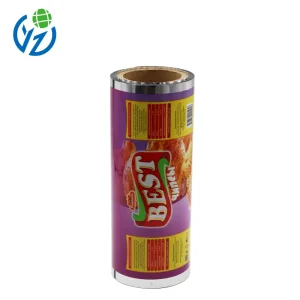
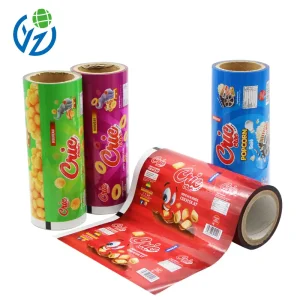
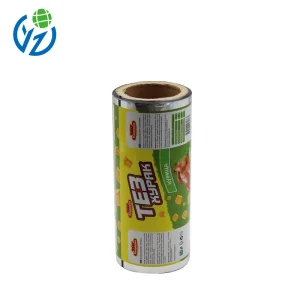
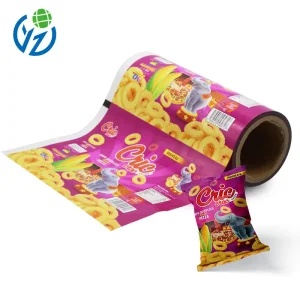
Dry mixes and snacks are highly sensitive to moisture and mechanical crushing. Our packaging solutions utilize custom-engineered plastic roll films and structured pouches with optimized slip properties. These films run smoothly on high-speed automated vertical form-fill-seal (VFFS) systems, while their high puncture resistance protects contents from physical damage during shipping.
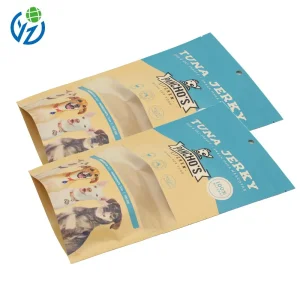
Larger pet food products require packaging with high tear resistance, strong seals, and reliable barrier properties to lock in nutritional oils and fats. We produce reinforced flat bottom bags—such as our FDA-approved Kraft stand-up pouches with resealable zippers—capable of carrying heavy volumes while preventing fat migration and leakage.
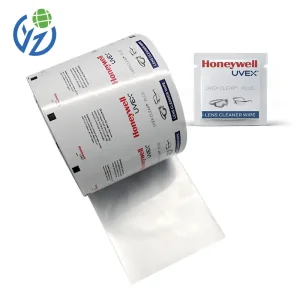
Medical and hygiene items, such as sterile alcohol disinfection pads, demand absolute barrier integrity to prevent the evaporation of active compounds. We produce specialized medical packaging films featuring thick aluminum foil barriers and heat-seal layers that are highly resistant to alcohol and chemicals, ensuring sterile conditions until use.
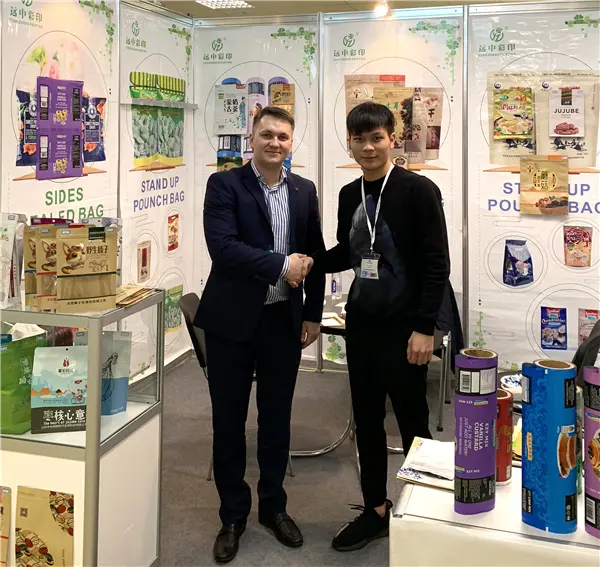
Yuanzhong Pack is committed to expanding its global footprint. We participate in international packaging and printing exhibitions across more than 10 countries. These events allow us to showcase our latest innovations in sustainable and high-barrier packaging, connect with industry partners, and collaborate directly with clients worldwide.
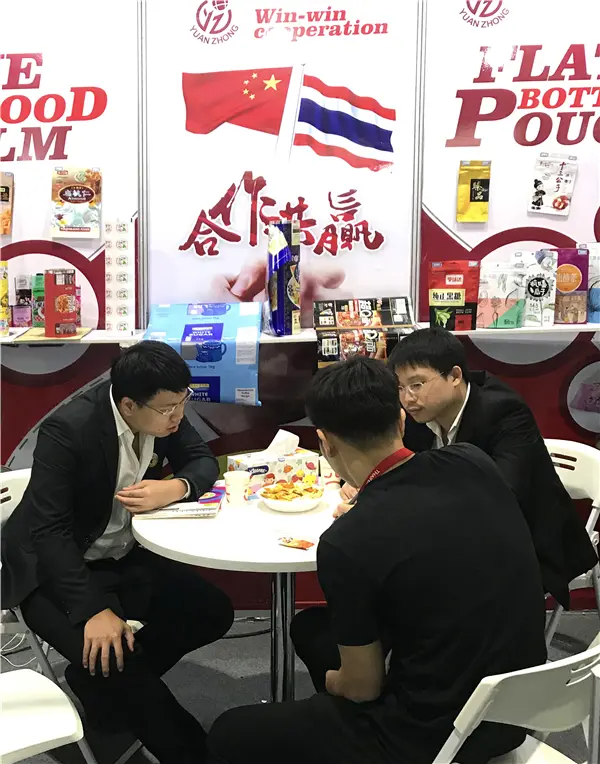
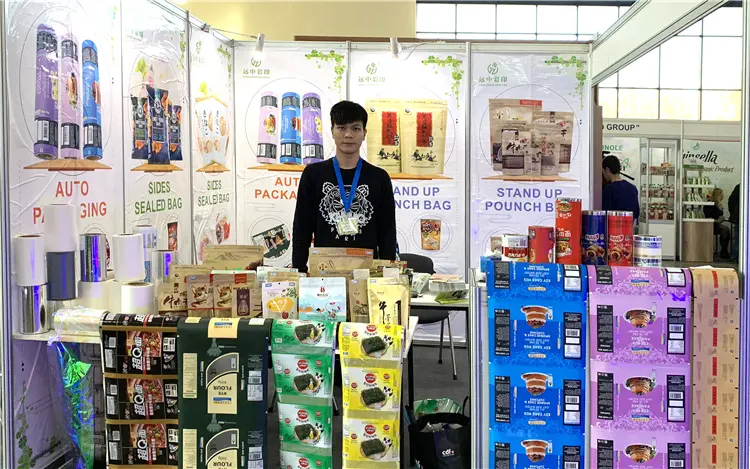
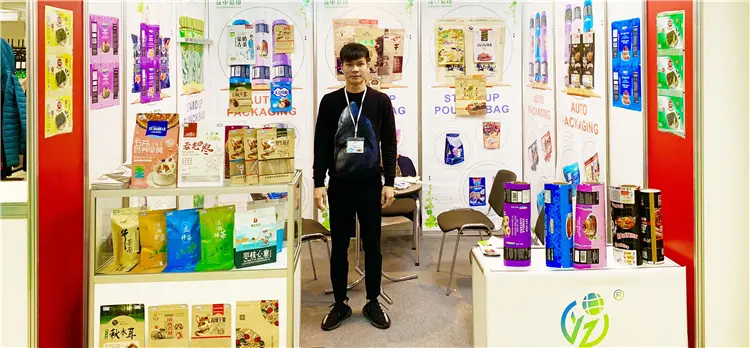
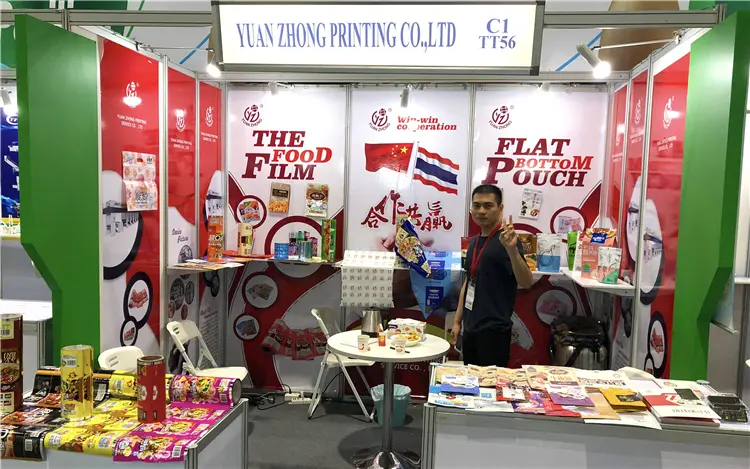
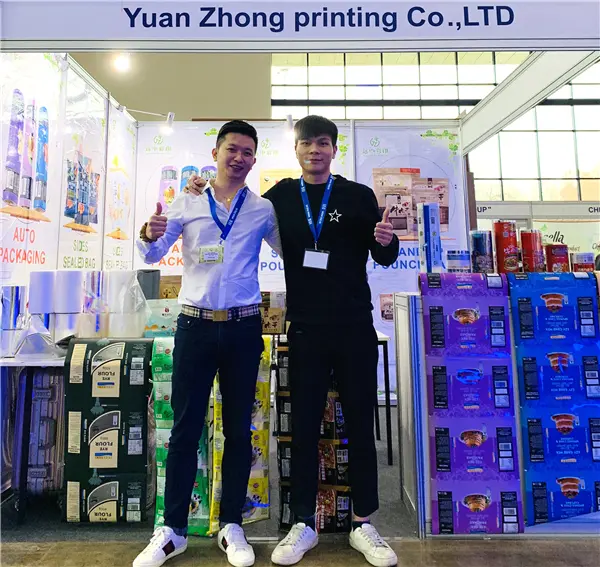
We work closely with over 20 global brands to deliver high-quality, reliable packaging solutions that meet the requirements of retail, food service, and industrial applications.



As the packaging industry moves toward circular economic models, packaging design must align with new carbon emission standards and resource-conservation policies. At Yuanzhong Pack, our research and development team focuses on advancing materials science along three core initiatives:
We are working to transition traditional composite laminates to mono-material structures (such as mono-PE or mono-PP). This simplifies the sorting and processing steps in municipal recycling systems, helping brand owners meet strict environmental packaging targets without sacrificing barrier performance.
By integrating oxygen scavengers, gas-indicator dyes, and smart QR codes directly into the laminate layers, we help brands track product freshness throughout the supply chain and provide consumers with verifiable proof of product safety.
We are actively testing bio-based polyesters (such as PLA and PHA) that offer industrial compostability. When paired with high-barrier paper layers, these substrates provide a functional, plastic-free alternative for dry ingredients, organic foods, and short-shelf-life retail products.
Find technical details regarding materials, production capacities, and configuration options for our custom flat bottom bags.
Our standard minimum order quantity for custom gravure-printed flat bottom bags ranges from 10,000 to 20,000 pieces per design, depending on the pouch dimensions and laminate configuration. For unprinted or standard roll stock, we can offer lower MOQs. Please contact our sales team with your specific size and material specifications to receive an accurate quote.
Yes. We offer fully recyclable mono-material (such as MDO-PE/PE and PP/PP) flat bottom pouches. These configurations utilize thin EVOH layers to deliver high barrier performance against oxygen and moisture while remaining compatible with standard plastic recycling streams.
Dry lamination uses solvent-based adhesives which are passed through a drying oven to evaporate the carrier solvent before bonding the layers. Solvent-free lamination uses multi-component adhesives that bond via a chemical reaction without solvents. Solvent-free lamination eliminates solvent emissions, reduces energy consumption, and prevents chemical migration issues, making it an ideal choice for food-contact packaging.
For new custom printing runs, the lead time is typically 18 to 25 working days. This timeline accounts for print cylinder engraving, printing, lamination, curing, slitting, and final bag making. Repeat orders with unchanged graphics are generally faster, as the cylinder preparation stage is excluded.
Yes. We produce high-speed packaging roll film for automatic vertical form-fill-seal (VFFS) and horizontal form-fill-seal (HFFS) lines. We calibrate the coefficient of friction (COF) and seal temperature profiles to ensure compatibility with your automated packaging machinery.
Engineered for food safety and high structural strength, certified to meet international industrial standards.
 Yuanzhong Printing