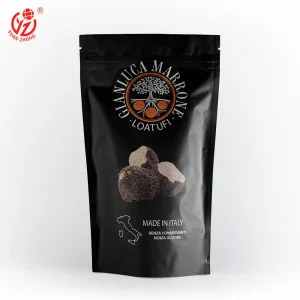
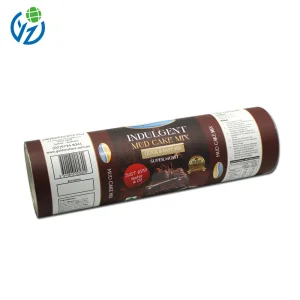
Browse our top-tier customized packaging pouches and high-barrier industrial film rolls manufactured to preserve freshness and boost shelf-appeal.
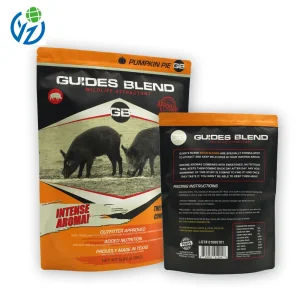
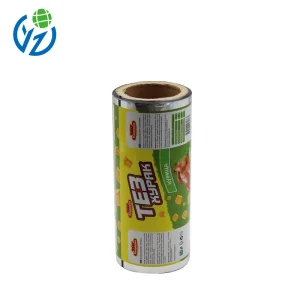
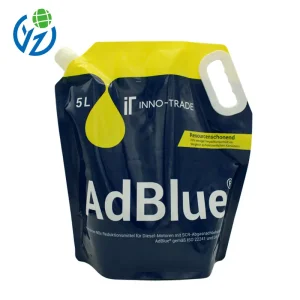
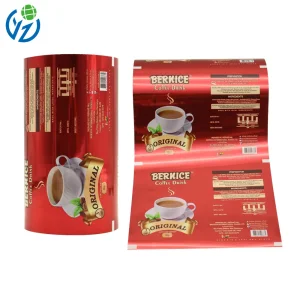
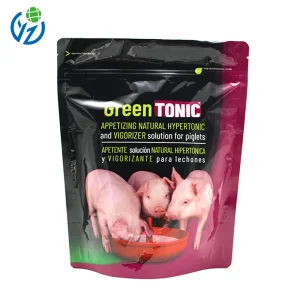
Established in 2001 and situated in the Jiedong District of Jieyang City, Guangdong Province, Jieyang Yuanzhong Printing Co., Ltd. has forged a reputation as an industry pioneer in the design, printing, and manufacturing of custom coffee bag printing, functional films, and flexible food pouches.
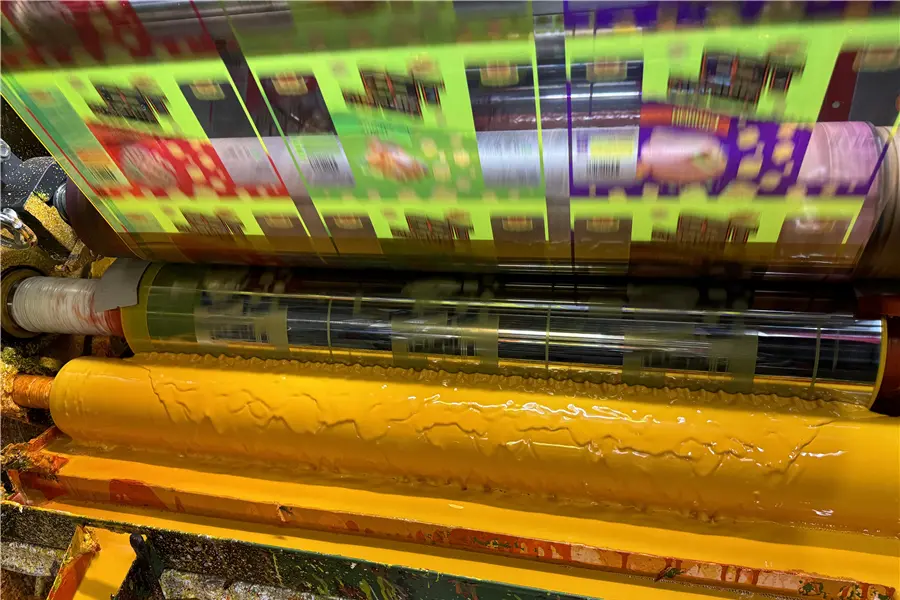
Our expansive production floor integrates imported world-class machinery, including state-of-the-art fully automatic printing lines such as the acclaimed Japan Komori Offset Production Lines. Our processing technologies operate under stringent quality certifications to support a massive monthly capacity surpassing 240 tons of finished laminates.
We pride ourselves on an robust and agile customization pipeline. From tailor-made barrier material combinations to unique shapes, integrated de-gassing valves, and distinct finishes, we ship custom-engineered packaging solutions to partners in over 30 countries across the Americas, Europe, and Asia-Pacific.
Understanding the technical, economic, and design factors driving coffee preservation and brand experience globally.
In the highly competitive international coffee trade, flexible packaging is not merely a container; it is a critical scientific instrument designed to preserve organic properties. Roasted coffee beans are extremely sensitive to their environment. Immediately after roasting, they release large volumes of carbon dioxide ($CO_2$) while becoming highly susceptible to oxidation, moisture absorption, and ultraviolet (UV) degradation. The integration of high-performance materials and advanced custom printing technologies forms the frontline defense in preserving delicate flavor notes, complex lipids, and aromatic compounds.
Historically, the packaging industry relied heavily on generic tri-layer structures composed of Polyester (PET), Aluminum Foil (AL), and Polyethylene (PE) to achieve the barrier protection required for long shelf-lives. While these conventional structures offer excellent Oxygen Transmission Rates (OTR) and Moisture Vapor Transmission Rates (MVTR), the global market is rapidly shifting. Brands now demand sustainable materials, eco-friendly mono-material compositions, tactile varnishes, and custom aesthetics that resonate with conscious consumers, without compromising the bag's functional performance.
As a leading custom coffee bag printing manufacturer and supplier, Jieyang Yuanzhong Printing Co., Ltd. addresses this paradigm shift by leveraging multi-layer co-extrusion technology, localized supply-chain logistics, and precision rotogravure and offset printing. We support the entire production line from formulation engineering to graphic execution, ensuring that brands from localized boutique roasters to large multinational distributors maintain product integrity and brand differentiation.
Developing high-barrier flexible structures designed to extend shelf-life and preserve volatile coffee aromatics.
Utilizing high-purity aluminum foil (AL) sandwiched between polyester and polyethylene layers (PET/AL/PE), our structural designs achieve near-zero gas transmission rates. This setup blocks UV rays, oxygen, and atmospheric humidity, keeping oils from turning rancid.
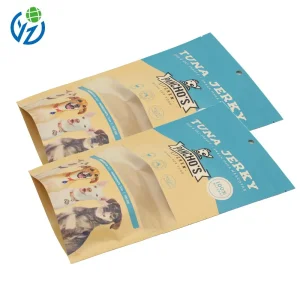
Engineered for brands focusing on sustainability, our FDA-approved Kraft Stand-Up Pouches with resealable zippers incorporate high-barrier, bio-based inner liners (e.g., PLA or recyclable mono-materials) that maintain product safety while reducing carbon footprints.
We install premium one-way degassing valves that allow carbon dioxide ($CO_2$) released by freshly roasted beans to escape the package without letting ambient air inside. This prevents pressure buildup while protecting the product from oxidation.
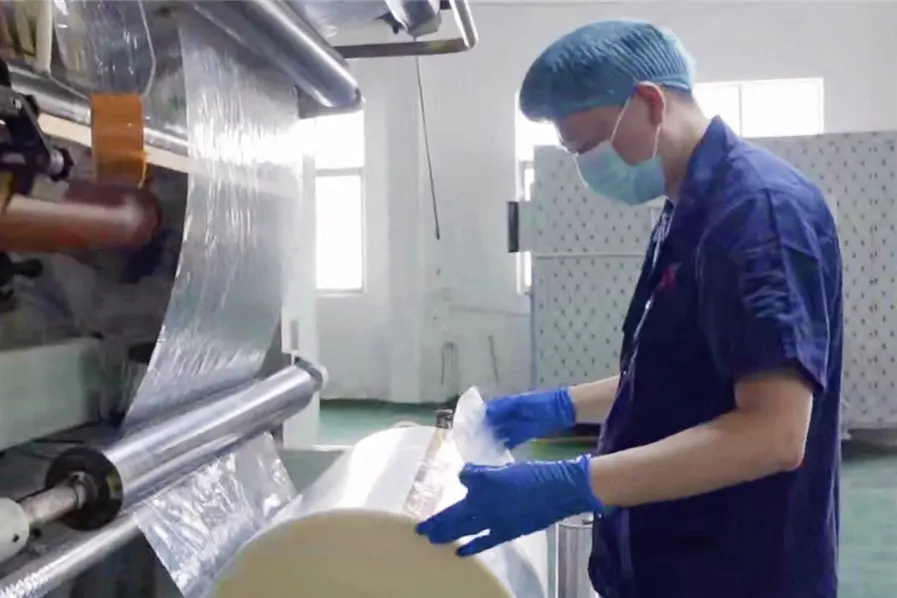
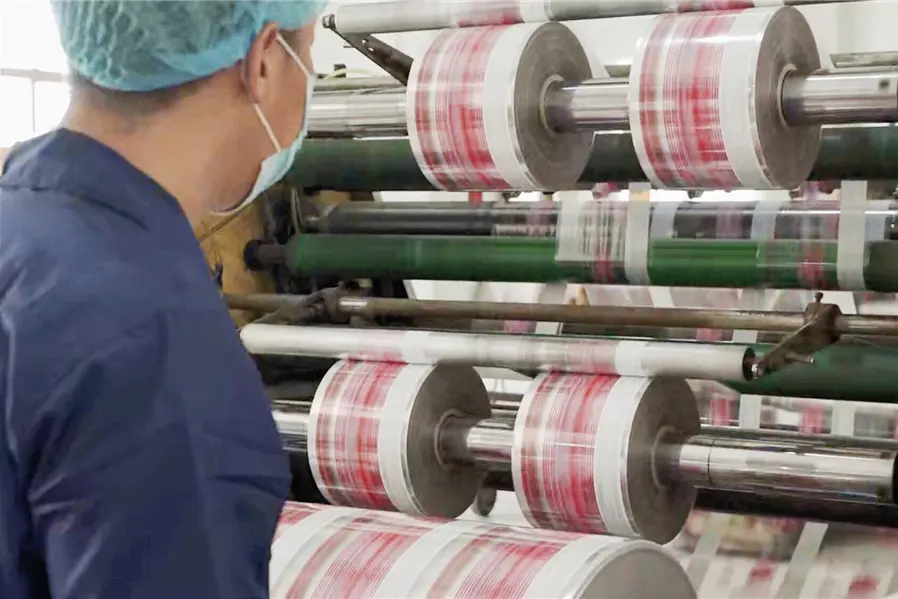
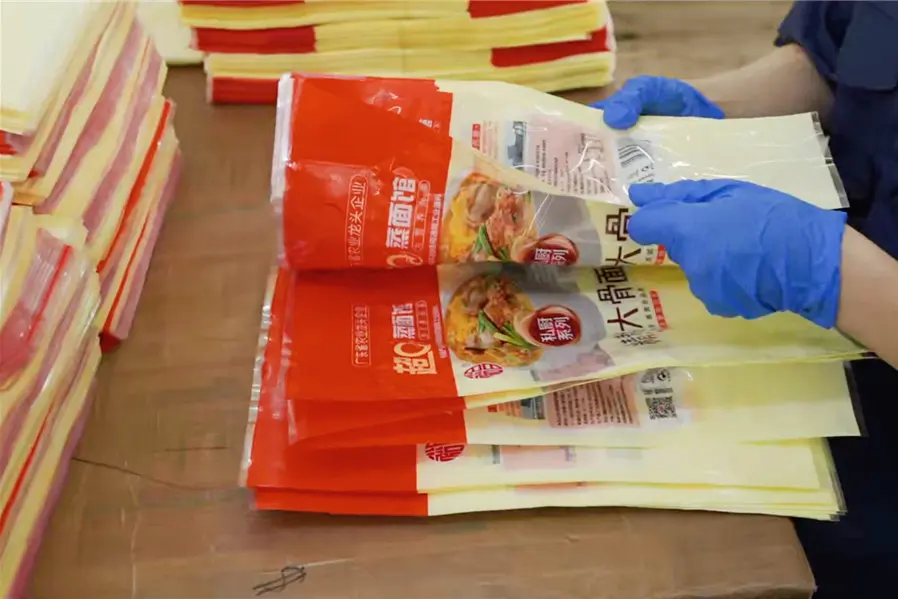
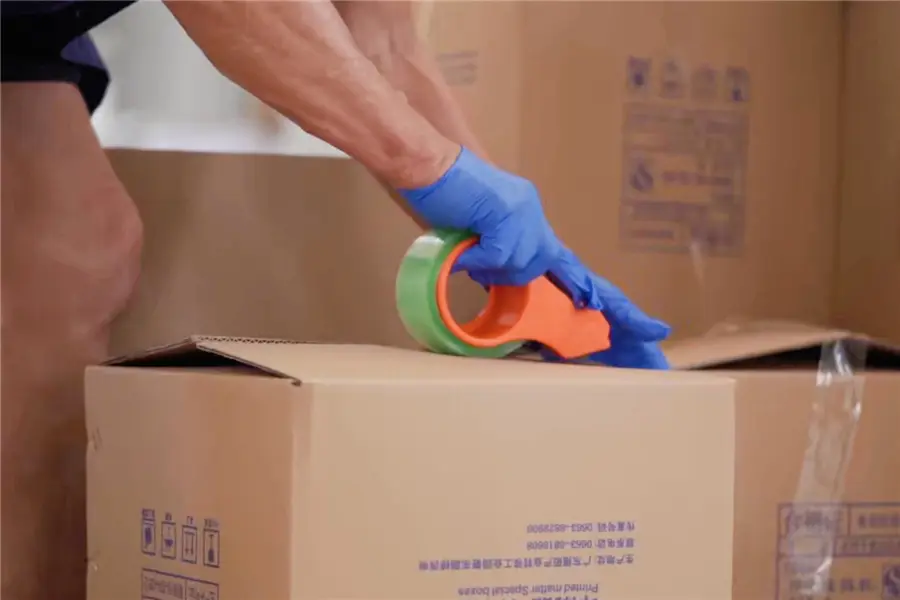
A step-by-step look at how we turn raw materials into high-barrier, beautifully printed flexible packaging.
How emerging technologies and changing retail dynamics are reshaping custom packaging design.
Driven by strict environmental regulations and shifts in consumer values, the packaging sector is actively moving away from multi-material laminates that are difficult to recycle. Modern facilities are focusing on mono-material solutions, such as fully recyclable polyethylene (PE) structures. These structures combine different densities of PE film to achieve the required barrier properties while remaining easy to recycle in standard streams.
In retail environments, tactile appeal is highly effective at capturing consumer attention. Specialty coffee brands frequently utilize combinations of matte coatings, spot UV elements, and paper-textured laminates to convey a premium, artisanal feel. These finishes protect the packaging from scuffs and handling wear during transit.
Smart packaging features, such as unique QR codes, are becoming standard tools for brand storytelling and traceability. Consumers can scan these codes to view roasting dates, farm origins, roast profiles, and brewing guides. This direct channel builds brand transparency and increases customer engagement.
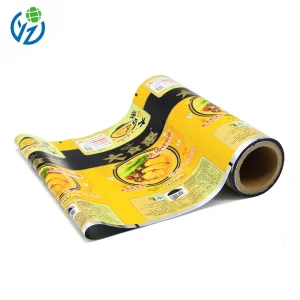
To reduce labor costs and increase output, medium-to-large roasters are moving from manual pouch filling to automated Form-Fill-Seal (FFS) machinery. Providing high-precision, customizable roll film yields high sealing integrity, lower cost-per-unit metrics, and reliable packaging line performance.
Tailoring specific packaging structures to match different coffee business scales and retail environments.
Boutique roasters require custom printed stand-up bags with resealable zippers, degassing valves, and rich tactile finishes. These features maintain bean freshness while creating a premium presentation on store shelves.
Large grocery and commercial retailers rely on quad-seal side-gusseted bags or flat-bottom bags. These designs offer excellent stability on shelves and maximize face space for bold branding graphics.
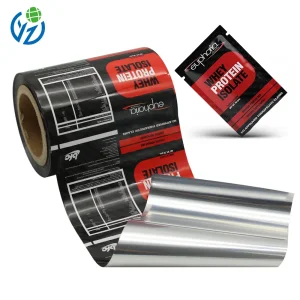
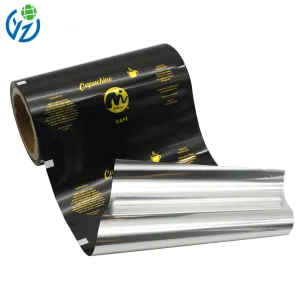
For high-capacity operations running automatic packaging lines, supplying high-performance rollstock films ensures smooth, high-speed runs and consistent barrier seals.
Exploring the World Through Exhibitions: A Journey Across More Than 10 Countries, demonstrating our presence globally.
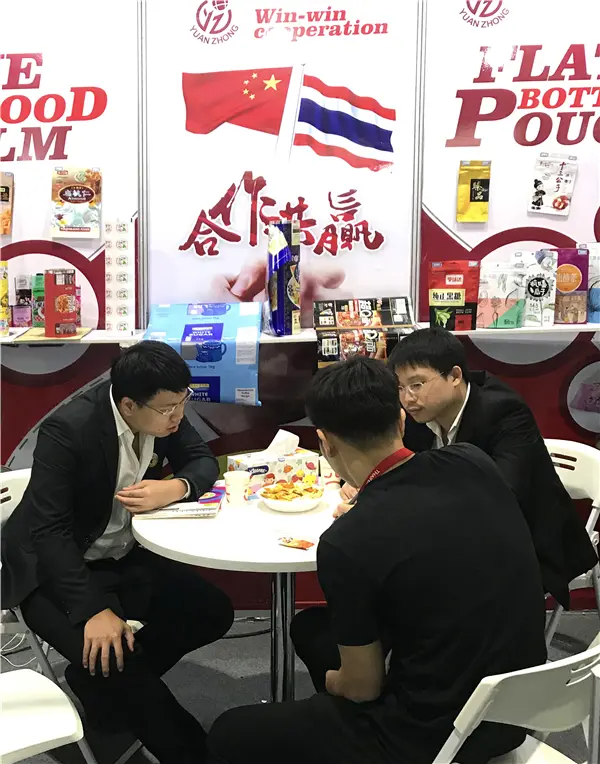
Connecting directly with roasters, packaging buyers, and industry partners to share our latest flexible packaging innovations.
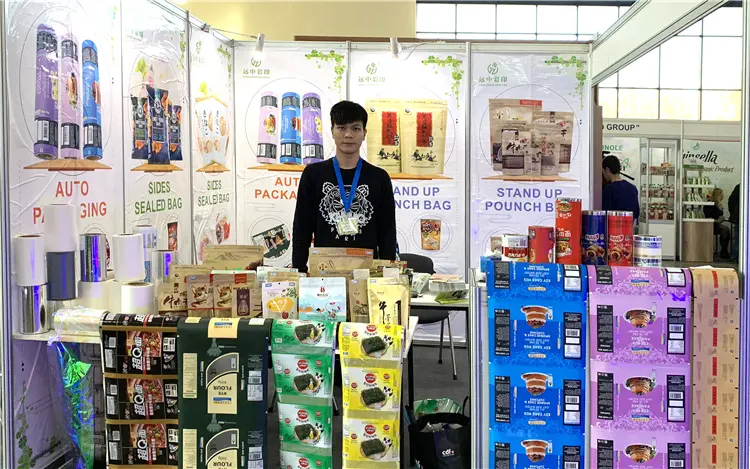
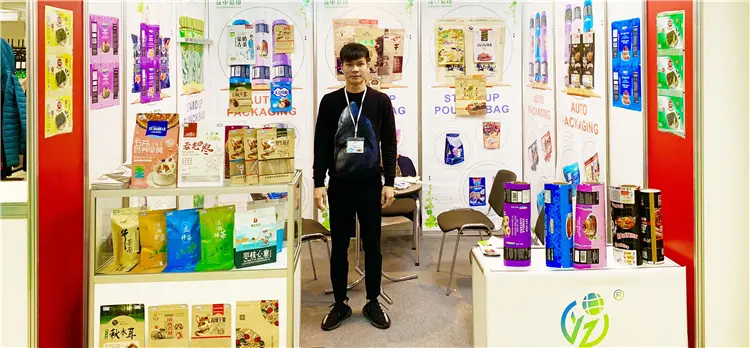
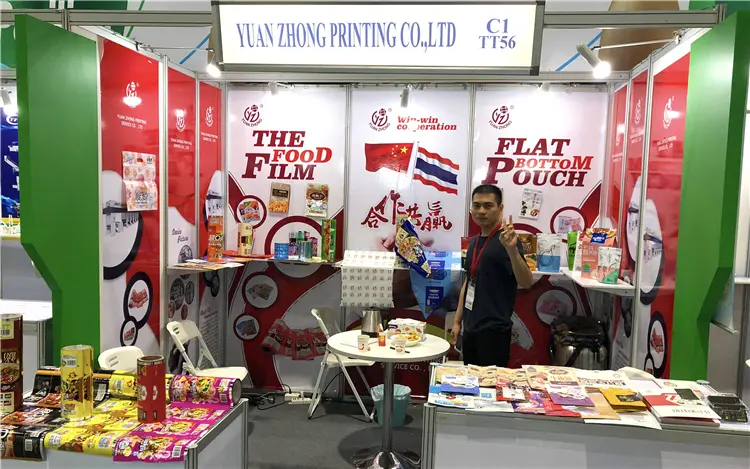
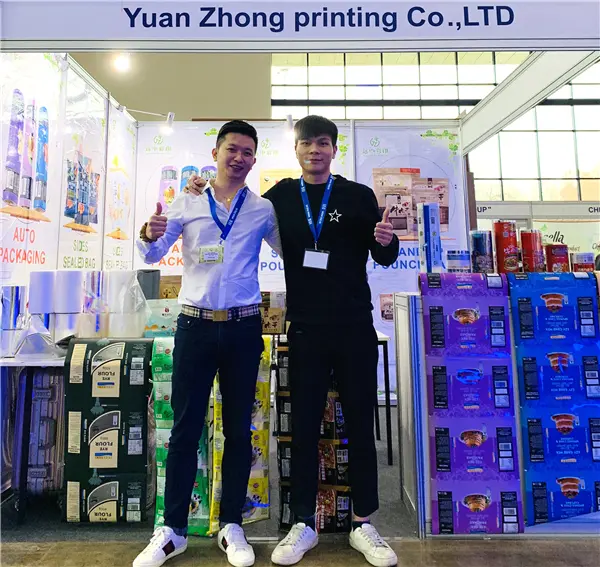
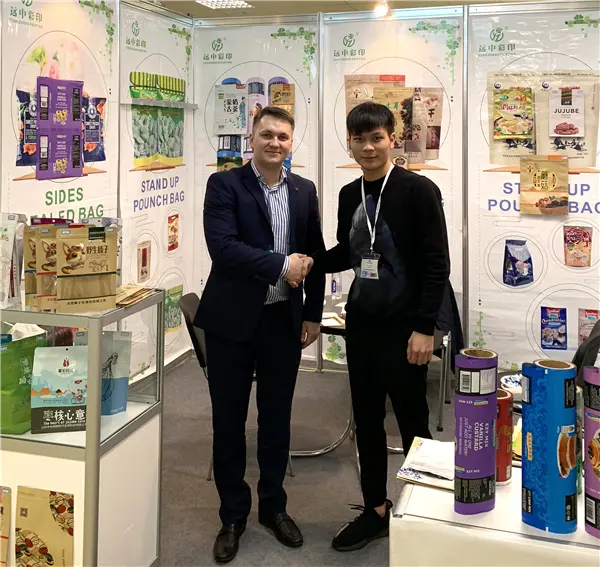
Cooperating with More Than 20 Brands: A Testament to Our Commitment to Excellence and Product Reliability.


Get expert answers to common queries about flexible barrier films, custom plate fees, design options, and orders.
After roasting, coffee beans release carbon dioxide gas ($CO_2$) for several days. If placed in a completely sealed bag without a valve, the escaping gas causes the bag to bloat and eventually burst. A one-way degassing valve allows carbon dioxide to escape from the bag while blocking oxygen from entering. This keeps the beans fresh and prevents the packaging from bursting.
The standard structure is a tri-layer laminate: PET (outer layer for high-quality printing) / AL or VMPET (middle barrier layer to block oxygen, moisture, and light) / PE (inner food-grade layer for reliable heat sealing). We also produce eco-friendly alternatives using Kraft paper with compostable or high-barrier recyclable mono-material PE linings.
For rotogravure-printed custom coffee bags, our MOQ typically ranges from 10,000 to 20,000 pieces per design, depending on the pouch dimensions and material structure. This requirement is due to the setup times of high-speed rotogravure machinery and raw material extrusion runs.
Yes. Along with pre-formed stand-up pouches, we manufacture customizable flexible packaging film rolls. These films are engineered for high-speed automated vertical form-fill-seal (VFFS) and horizontal form-fill-seal (HFFS) packaging machines.
Explore our technical aluminum laminate rolls, versatile custom food bags, and eco-friendly packaging options.
 Yuanzhong Printing