Engineered to maintain food freshness, integrity, and safety through extreme thermal processing environments.
Pioneering Global Food-Grade Packaging & Advanced Retort Tech Since 2001
Founded in 2001 and situated in the Jiedong District of Jieyang City, Guangdong Province, Jieyang Yuanzhong Printing Co., Ltd. is a leading manufacturer specializing in packaging decoration printing and highly specialized plastic packaging bags. With over 20 years of focus, we deliver elite-level solutions tailored for retort food thermal sterilization processes.
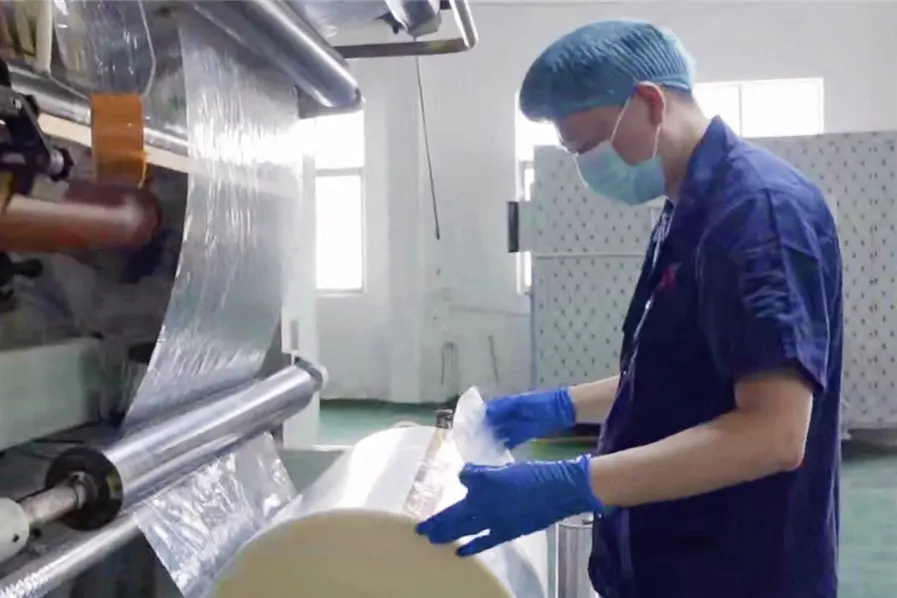
Our packaging facilities boast imported mechanical assets including fully automatic Japanese Komori printing lines, allowing us to maintain a reliable production capacity exceeding 240 tons monthly. This large-scale infrastructure ensures we efficiently serve commercial brands across 30 countries.
Our engineering emphasis centers on customized material composition, optimizing films to withstand retorting cycles ranging from 121°C to 135°C without compromising mechanical hermetic seals, barrier properties, or package geometry.
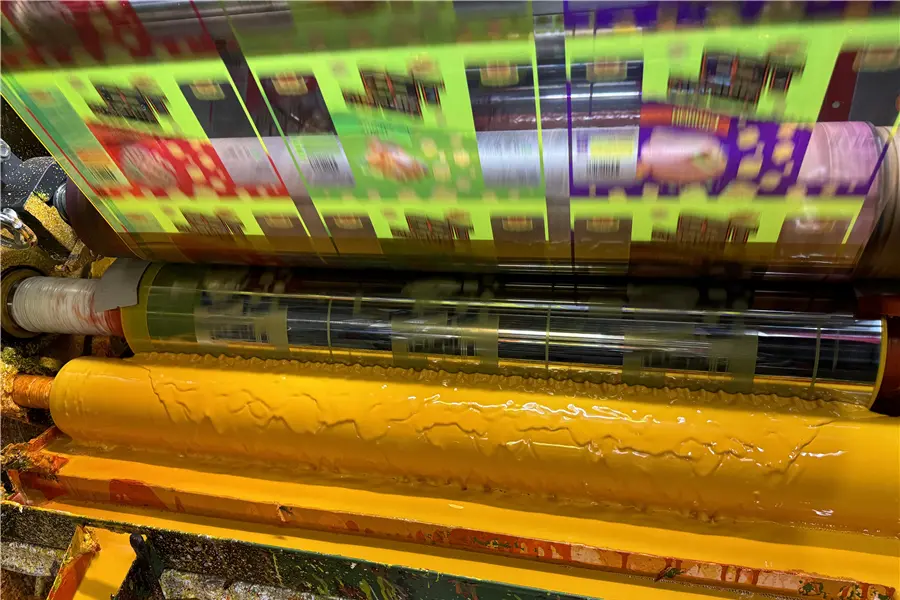
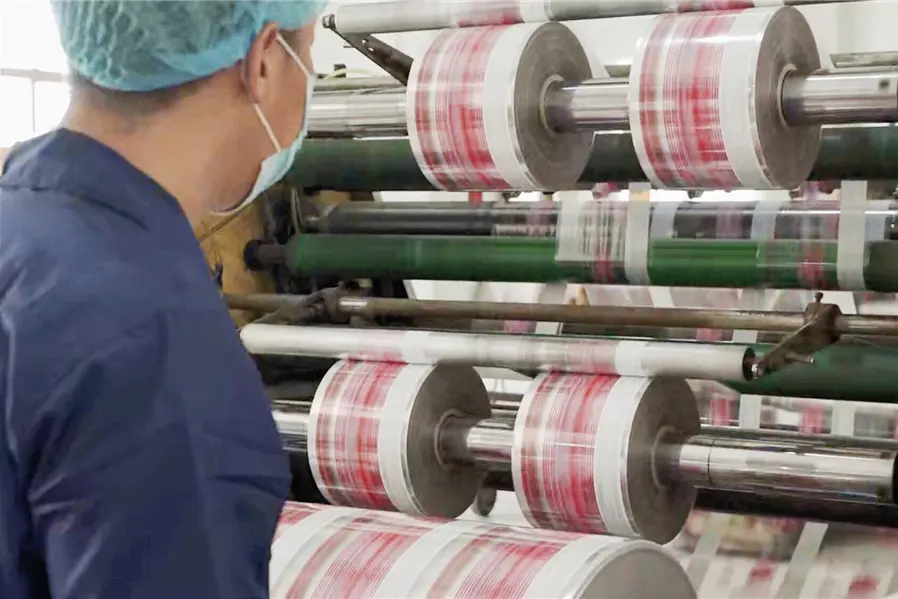
Advanced multi-color high-speed gravure and offset press setups assure pin-point alignment registration, high ink adhesion, and zero food-side contamination.
All raw resins, adhesive polymers, and ink structures comply strictly with US FDA, European Union, and BRC food contact regulations.
An authoritative analysis of the structural shifts from traditional rigid metal cans to lightweight, flexible retort pouches.
The global retort food industry is experiencing an unprecedented structural pivot. Retort food represents items cooked and sterilized inside hermetically sealed containers under high pressure and temperatures (typically 121°C to 135°C). Historically dominated by heavy, carbon-intensive metal cans, modern processing relies increasingly on flexible retort pouches.
This transition is driven by consumer demand for convenience, changes in logistics cost-structures, and sustainability targets. Flexible retort packaging requires up to 70% less plastic material by weight than corresponding rigid formats, translating directly to massive logistics fuel-cost savings during empty shipping, storage, and outbound distribution.
Additionally, the heat penetration rate of a thin, flat flexible pouch is significantly faster than that of a thick metal cylinder. This reduced thermal exposure time minimizes heat damage to foods, preserving natural flavors, moisture levels, vitamins, and overall nutritional profile. In terms of shelf-stability, advanced composite structures maintain barrier protection levels equivalent to glass and tin cans, achieving a shelf-life of 12 to 36 months without refrigeration.
Flexible pouches optimize spatial logistics. One truckload of empty retort pouches matches the product volume of up to 25 truckloads of empty glass jars or metal cans.
B2B food brands minimize manufacturing overheads by upgrading packaging lines to high-speed Form-Fill-Seal (FFS) systems integrated with automatic retort autoclaves.
Shorter heating cycles keep vegetables firm, retain seafood proteins without mushiness, and protect meats from over-processing.
Analyzing the multi-layer barrier chemistry that protects food against moisture, oxygen ingress, and mechanical failure during autoclave processing.
A high-performance retort pouch is an engineered laminate consisting of multiple specialized film layers. Each layer has a specific mechanical or chemical purpose designed to withstand the combined stresses of extreme thermal processing, high pressure, and physical handling.
Typically, the layers consist of an outer printing layer, a middle barrier layer, an optional reinforcing layer, and an inner sealant layer:
| Film Layer | Common Materials | Primary Technical Purpose | Retort Temperature Performance |
|---|---|---|---|
| Outer Layer | PET (Polyester) | Provides high thermal resistance, printability, high gloss, and structural protection for the barcode and design graphics. | Stable up to 135°C; prevents shrinkage during sealing. |
| Reinforcement | BOPA / NY (Biaxially Oriented Nylon) | Offers high impact strength, puncture resistance, and flex-crack resistance. Protects the barrier layer from microscopic pinholes. | Excellent thermal stability, highly flexible under steam pressure. |
| High-Barrier | AL (Aluminum Foil) or AlOx/SiOx | Provides near-zero Oxygen Transmission Rate (OTR) and Water Vapor Transmission Rate (WVTR). Completely blocks light degradation. | Maintains hermetic barrier performance under continuous high heat. |
| Inner Sealant | RCPP (Retort Cast Polypropylene) | Provides high-strength heat-seals, chemical resistance, and direct food-contact compatibility. Prevents food oil reaction. | Specially formulated to remain solid and tight during 121°C - 135°C sterilization. |
At Yuanzhong Pack, our composite processes utilize advanced solvent-free adhesive formulations. Standard flexible adhesives often degrade and hydrolyze when exposed to 121°C steam, which can lead to layer separation (delamination) and eventual pack failure. Our engineering team utilizes highly cross-linked polyurethane adhesives designed to remain intact throughout the sterilization process and post-retort shelf storage.
How Yuanzhong Pack leverages advanced manufacturing automation in Guangdong to secure reliable global supply chains.
In the competitive global supply chain environment, food brands face pressure from volatile raw material costs, shifting trade tariffs, and tight delivery schedules. China's manufacturing sector has adapted by integrating Industry 4.0 automation. For packaging buyers, this translates to consistent quality, lower reject rates, and reliable capacity.
At our Jiedong District facility in Guangdong, we run computerized operations across all production stages:
We source FDA-approved resins directly from leading polymer producers, ensuring complete batch traceability for all retort-grade films.
Our composite and slitting machinery utilizes high-resolution optoelectronic tension sensors. This prevents micro-stretching and wrinkling of thin aluminum foils, avoiding post-processing leaks.
Every roll of retort film undergoes on-line visual detection during printing, followed by off-line tensile and seal-strength tests under simulated autoclave conditions.
Gravure printing occupies a critical role in packaging because of its thick ink layer, high saturation, long-run plate durability, and fast production speeds.
Customizable retort configurations engineered for specific commercial, defense, and retail food operations worldwide.
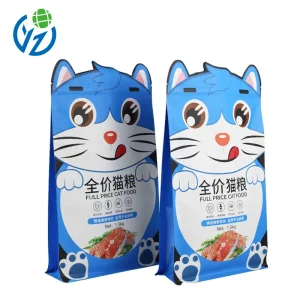
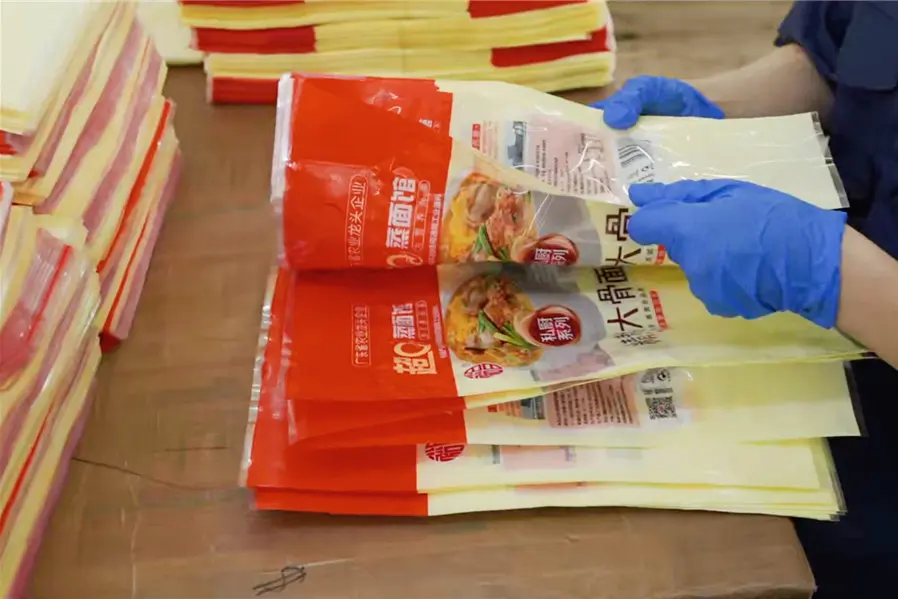
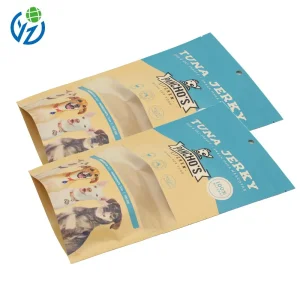
Pet foods contain high levels of fats, proteins, and minerals. Our specialized foil laminates block odors, protect against oil migration, and prevent degradation over a 24-month shelf life. Available in stand-up, 3-side seal, and flat-bottom formats with integrated tear notches.
Designed for field operations (MREs - Meals Ready to Eat). These pouches require high puncture resistance to withstand physical drops, transport vibrations, and intense outdoor heat, while allowing easy thermal heating in boiling water or via chemical ration heaters.
Stand-up pouches with high-grade barrier properties let consumers cook and consume directly from the package. Features include laser scoring for straight, clean tearing, hang holes for retail displays, and microwave-safe non-foil options.
Replaces large food service cans. Spout pouches allow clean, metered dispensing of sauces, purees, and gravies. They minimize food waste, cut disposal costs, and reduce storage volume by 90% compared to rigid steel cans.
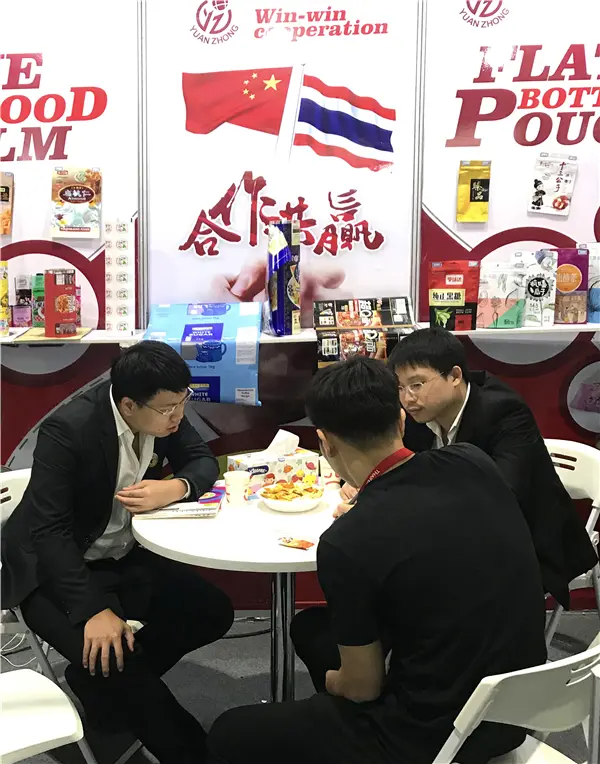
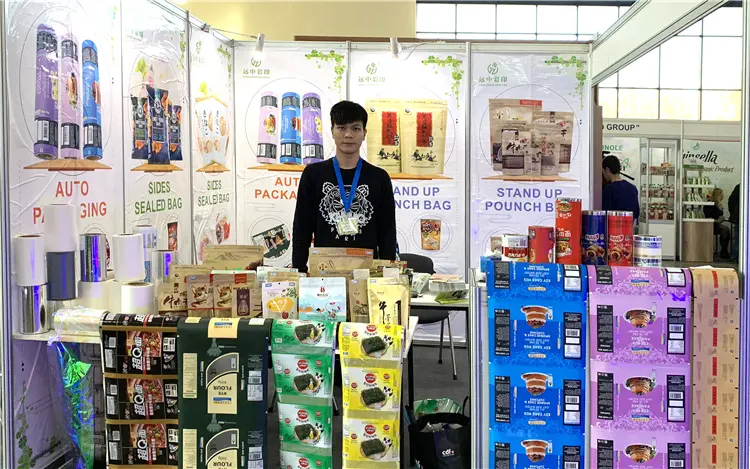
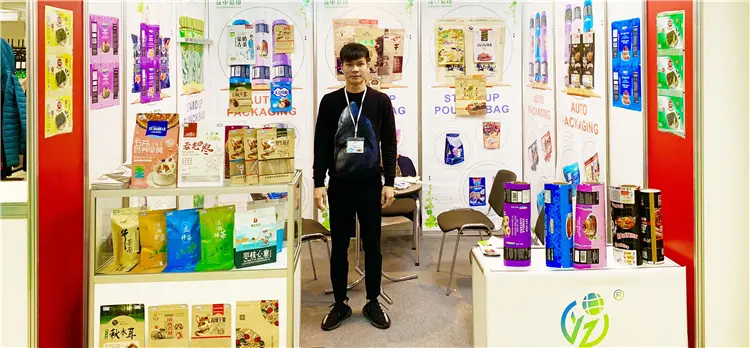
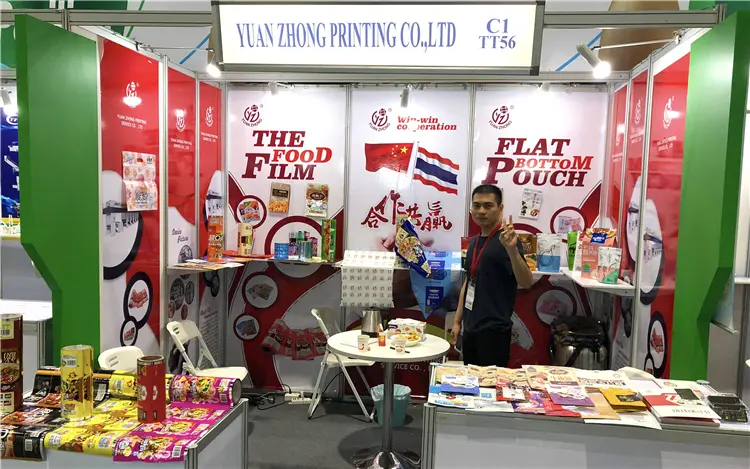
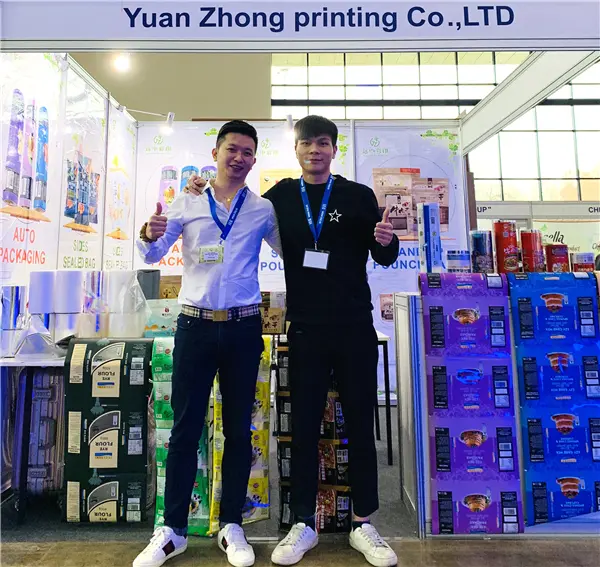
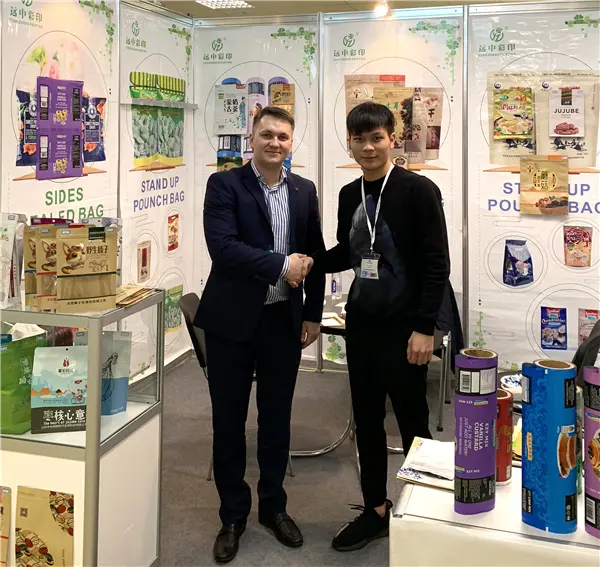
Exhibiting globally in over 10 countries and partnering with 20+ prominent international consumer brands.









Technical answers to key packaging, safety, and supply logistics questions from commercial food production managers.
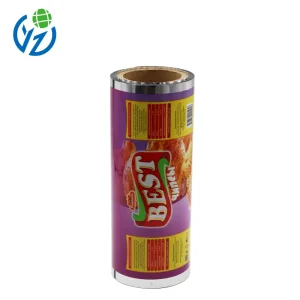
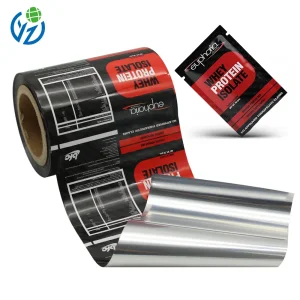
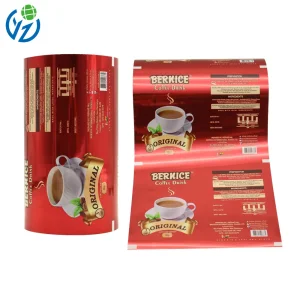
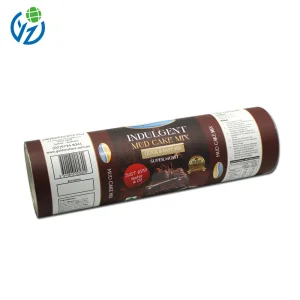
High-speed roll stocks and pre-formed pouch variants for automatic filling lines.
 Yuanzhong Printing