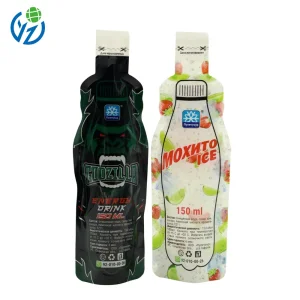
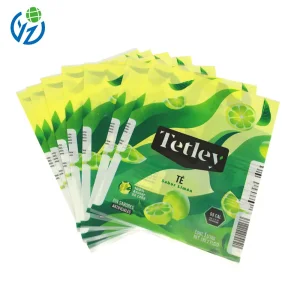
Explore our core range of custom-printed laminates, high-barrier bags, and automated roll stock, engineered to elevate shelf appeal and ensure preservation.
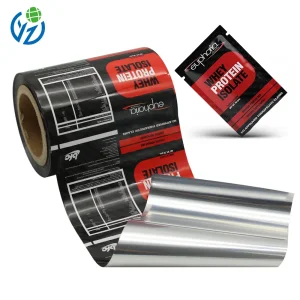
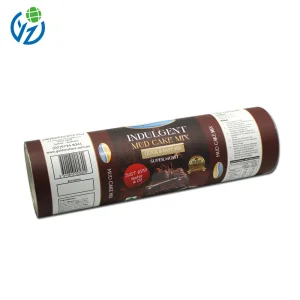
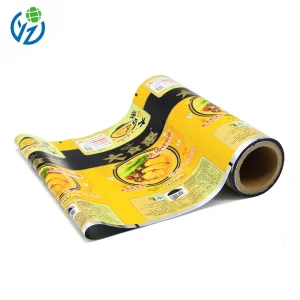
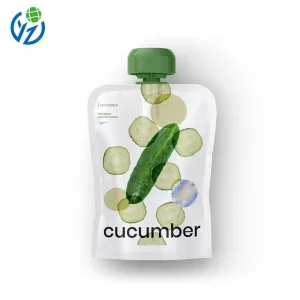
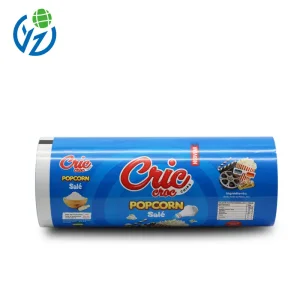
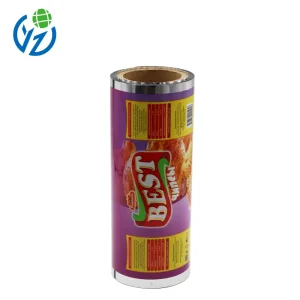
Founded in 2001 in the Jiedong District of Jieyang City, Guangdong Province, Jieyang Yuanzhong Printing Co., Ltd. has established itself as an authoritative leader in high-performance flexible packaging manufacturing. With over two decades of technical expertise, our factory specializes in the comprehensive formulation of custom stand-up pouches, multi-layer laminated roll stock, spout pouches, and unique die-cut shapes tailored for demanding global industries.
Spanning state-of-the-art facilities equipped with Japanese Komori fully automatic printing production lines, dry-lamination complexes, and high-speed slitting lines, we boast a reliable monthly processing capacity exceeding 240 metric tons of high-barrier packaging materials. We support brands in navigating complex international regulatory landscapes by ensuring that 100% of our products meet food-grade safety standards and toxicological compliance metrics.
Yuanzhong Pack operates under strict ISO 9001:2015 quality management and food hygiene frameworks. By utilizing high-purity laminates, low-solvent ink formulations, and cutting-edge mechanical execution, we deliver packaging solutions that withstand the rigors of distribution, protect shelf life, and captivate consumers.
Discover the precise step-by-step engineering cycle of our flexible packaging lines, guaranteeing premium optical density, high adhesion strength, and clean, sterile pouch conversion.
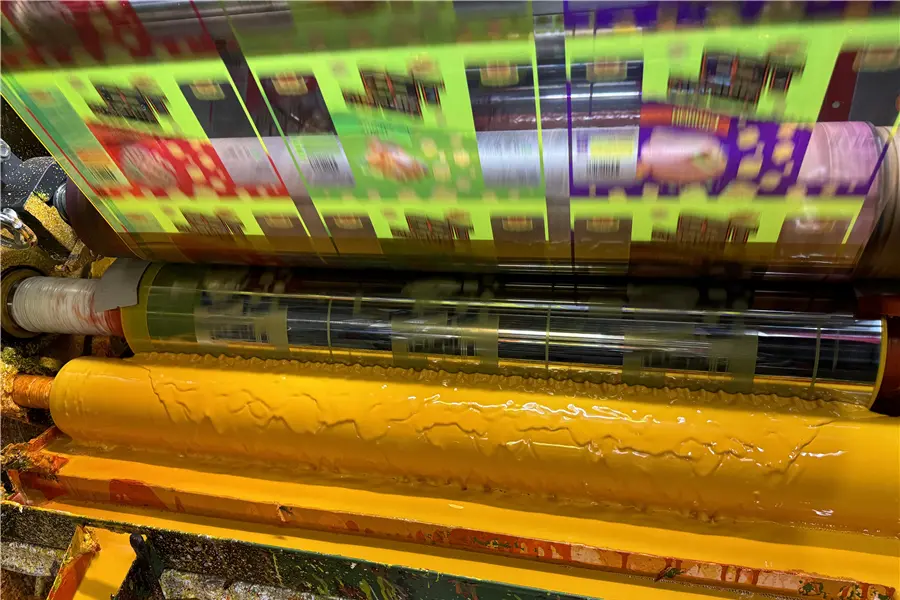
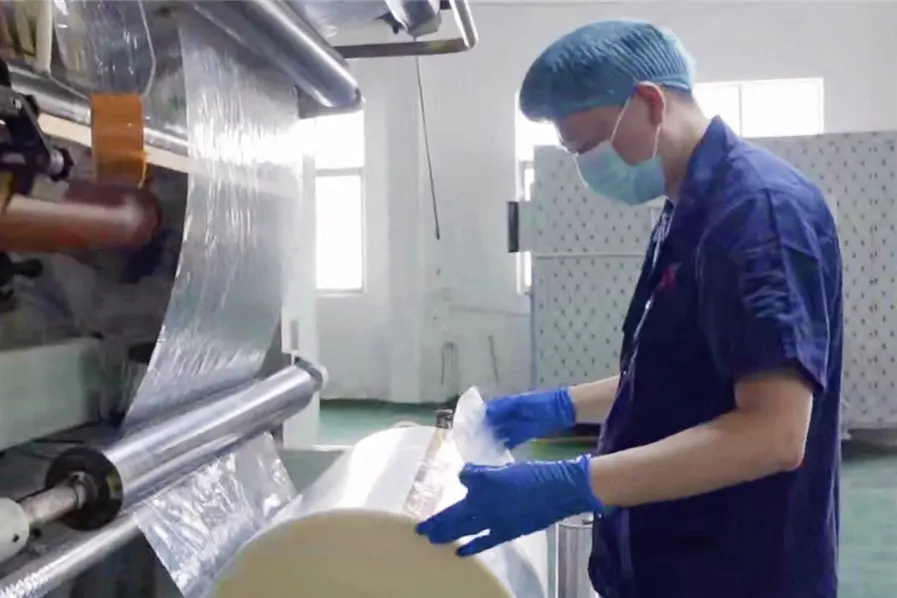
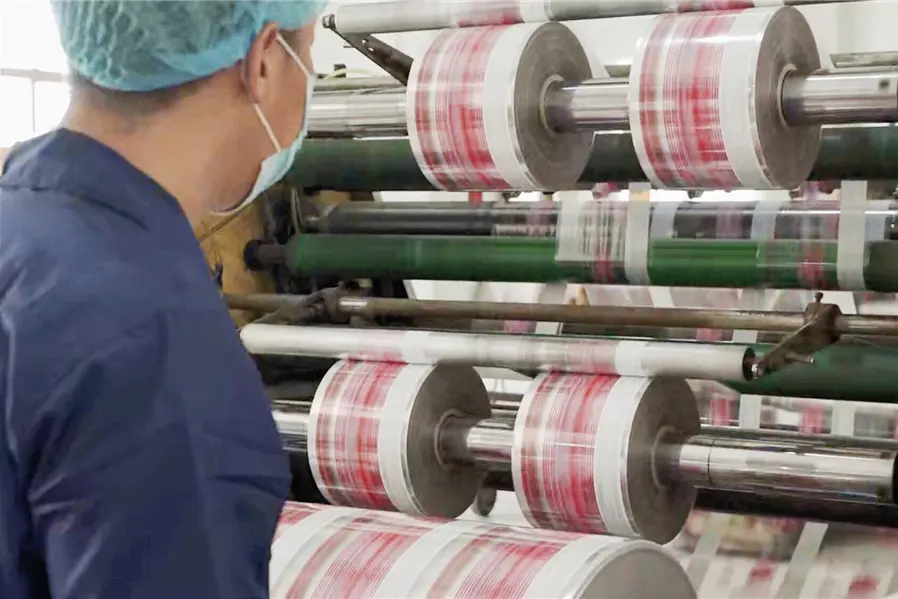
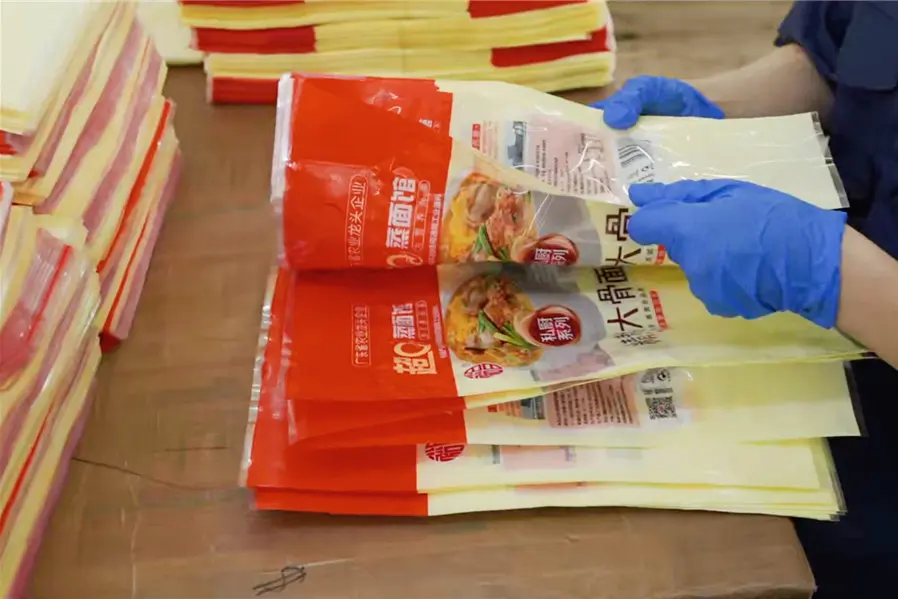
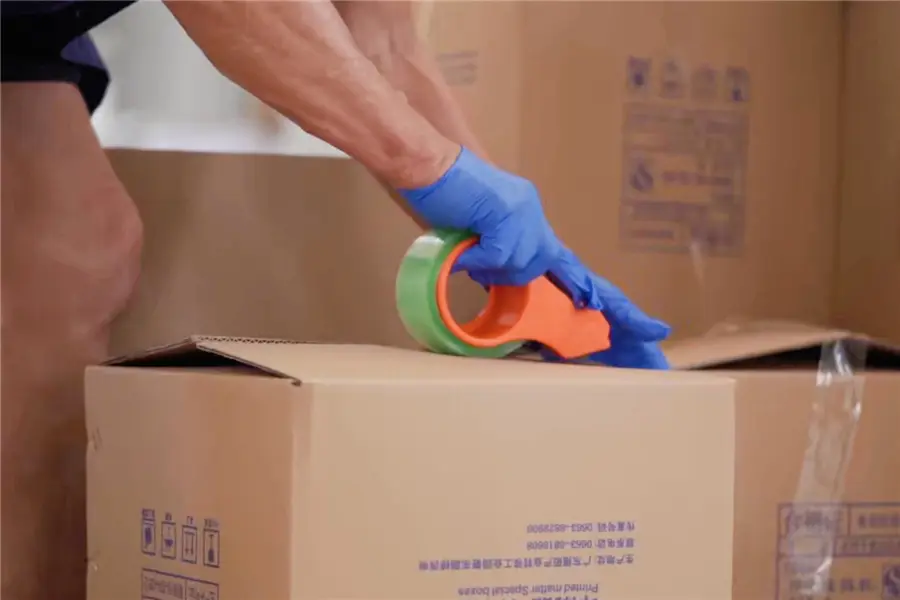
In modern industrial packaging, rotogravure printing stands as the gold standard for high-volume commercial production. It uses direct transfer of ink from cell-engraved metal cylinders directly onto polymeric or cellulosic substrates. This methodology yields incredibly thick ink layers, rich color saturation, excellent dot reproduction (even in gradients), and unmatched plate durability. For long production runs, gravure offers the lowest cost per unit with the highest color stability from the first meter to the last.
China's packaging cluster, particularly in Guangdong Province, offers an unmatched supply ecosystem. From ultra-barrier metalized films and chemical suppliers to cylinder-engraving automation and high-speed secondary machines, this localization dramatically compresses lead times and lowers peripheral engineering costs.
For global procurement teams, this translated structure means immediate raw material availability (BOPET, BOPA, EVOH, AL Foil, and bio-polymers) even during tight supply cycles, ensuring unbroken production schedules.
As a global enterprise brand, your security relies on supplier speed, scaling capability, and cost consistency. Our manufacturing plant utilizes these elements to provide strategic advantages that Western converters struggle to replicate:
Understanding barrier performance is key to preserving product integrity. We engineer custom, multi-layer structures designed to combat oxidation, moisture ingress, UV degradation, and structural stress.
| Typical Film Structure | Target Applications | Oxygen Barrier (OTR) | Moisture Barrier (WVTR) | Key Strengths & Properties |
|---|---|---|---|---|
| PET / AL / LLDPE | Protein powder, Coffee bags, Milk powder | < 0.1 cc/m²/24h | < 0.1 g/m²/24h | Absolute barrier protection against gas, light, and aroma loss. Extremely rigid. |
| PET / VMPET / PE | Snack wraps, Cake mix, Confectionery | < 0.8 cc/m²/24h | < 0.8 g/m²/24h | Cost-effective metalized barrier alternative. Excellent metallic gloss and puncture resistance. |
| PET / Nylon / LLDPE | Spout liquids, Detergents, Pet food | < 1.5 cc/m²/24h | < 1.2 g/m²/24h | High burst strength, drop-test resistance, excellent puncture properties. |
| BOPP / VMCPP (Single/Coex) | Crisps, Potato chips, Puffed snacks | < 15.0 cc/m²/24h | < 1.5 g/m²/24h | Fast heat-sealing capabilities, crisp touch, optimized for high-speed automated vertical forms. |
| MOPP / VMPET / LLDPE | Snack wrappers, Premium dry food | < 0.8 cc/m²/24h | < 0.6 g/m²/24h | Matte textured finishes combined with rigid protective performance. Excellent shelf appeal. |
*Note: OTR tested at 23°C & 0% RH. WVTR tested at 38°C & 90% RH. Custom composite thicknesses ranging from 40 microns to 200 microns are available based on physical weight capacity requirements.
Ensuring absolute chemical compliance to safeguard your brand from liability and international recalls.
All plastic resins, masterbatches, and adhesives utilized in our factory conform strictly to FDA 21 CFR regulations and EU Directive 10/2011 for direct food contact. We issue migration assay documentations for every bulk production run.
Our rotogravure processes use low-solvent and polyurethane solvent-free lamination systems to keep overall volatile organic compound (VOC) residues below internationally mandated thresholds (typically < 10mg/m²).
We actively help brands transition to eco-friendly solutions, including mono-material recyclable PE/PE pouches, compostable PLA structures, and PCR (Post-Consumer Recycled) content integration, ensuring compliance with future circular economy laws.
Different product lines require distinct engineering characteristics. We adapt our machinery settings, film compositions, and seal designs to match the physical demands of localized industries.
Sports nutrition requires tough, moisture-resistant packaging that maintains chemical stability. Our custom stand-up bags feature broad gusset structures and robust zippers, engineered specifically to prevent powder fine-dust from fouling the track seals.
Replacing glass and rigid HDPE packaging, our ergonomic, custom-shaped spout pouches provide an eco-friendly option for juices, sauces, purees, and cleaning liquids. Double-gusset, drop-resistant designs ensure stability during delivery cycles and prevent leakage under pressure.
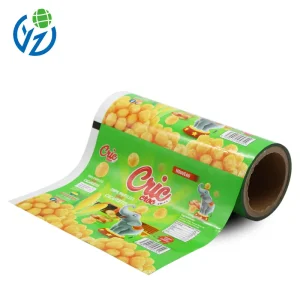
High-speed gas flushing (nitrogen injection) requires consistent seal integrity. Our custom metalized film rolls for potato chips, chocolate, and puffed snacks prevent flavor oxidation and seal failures, running smoothly on fast, vertical form-fill-seal (VFFS) systems.
Visual distinction on retail shelving drives consumer choice. We utilize CNC die-cutting tooling systems to manufacture uniquely shaped stand-up pouches that align with brand typography and visual cues. Features can include:
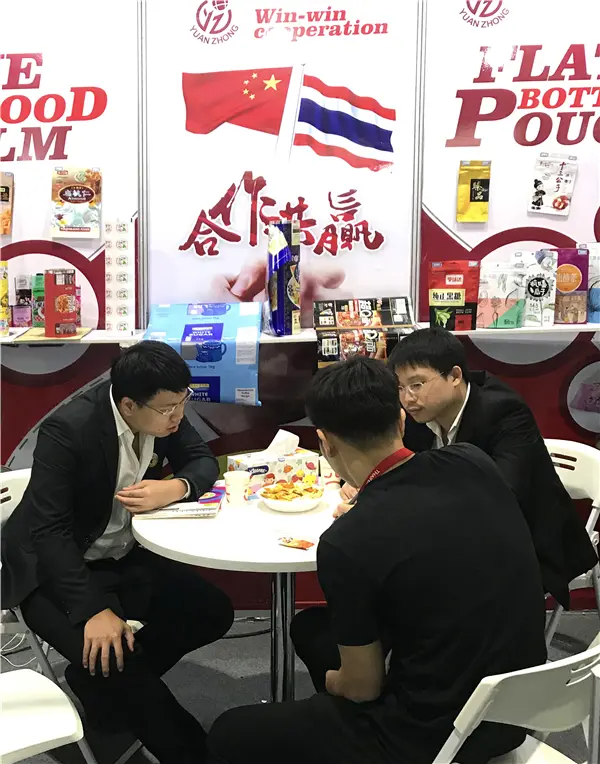
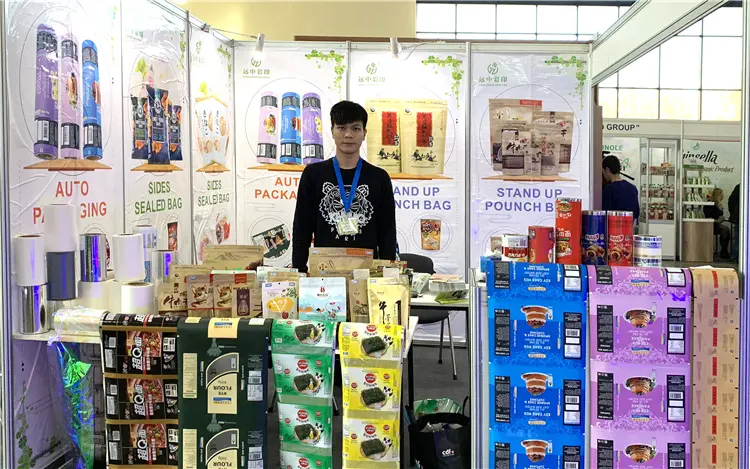
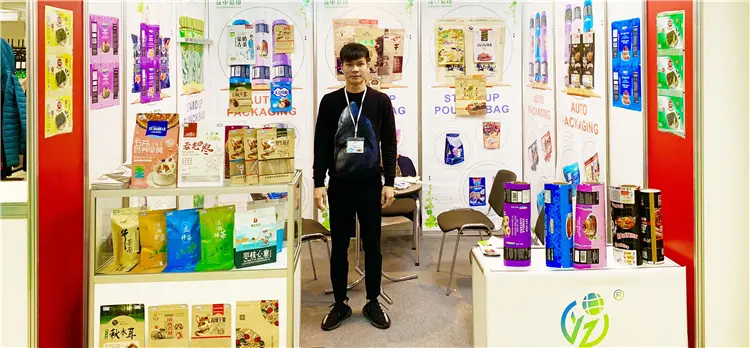
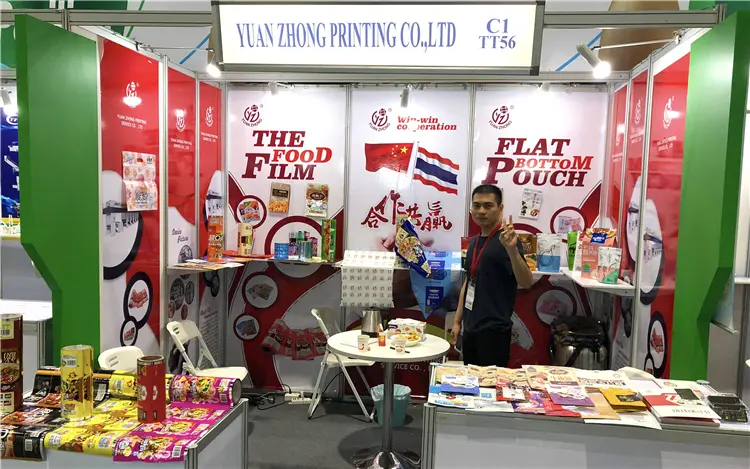
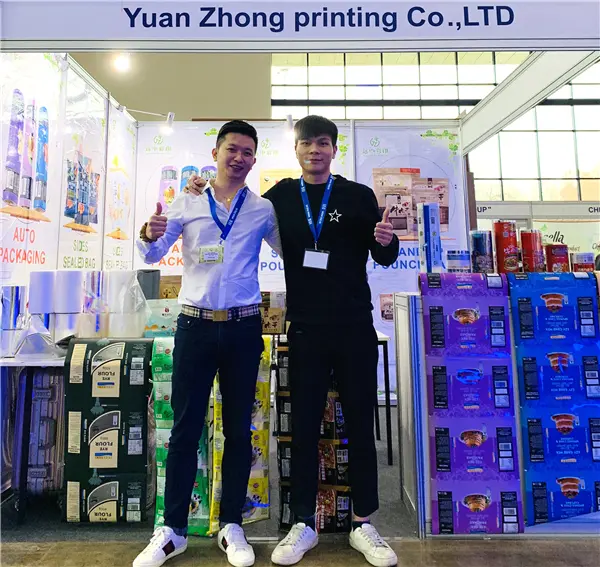
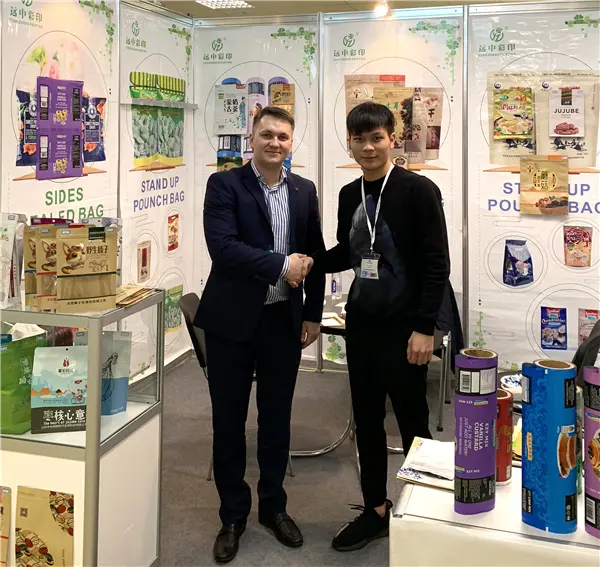
Our commitment to excellence is proven across world stages. Having showcased at packaging exhibitions in over 10 countries, we maintain long-term partnerships with leading consumer brands.



Get answers to technical and regulatory questions about sourcing custom flexible packaging from China.
Because rotogravure printing utilizes custom-engraved steel cylinders and requires set-up materials for color matching and alignment, the MOQ is typically dictated by the surface area of the film roll. For standard stand-up pouches, the MOQ generally ranges between 10,000 to 20,000 bags. For automated roll stock films, the MOQ is usually starting from 100 kg to 200 kg per design. In modern facilities, short-run digital options are available for smaller trial batches, though gravure remains the most economical path for mid-to-high volumes.
Our direct access to specialized laser cylinder engraving houses enables us to process steel base cylinder electroplating, copper polishing, laser engraving, and chrome hardening within 5 to 7 working days from the moment of artwork design sign-off. Each color channel requires its own physical cylinder. These cylinders are stored in climate-controlled environments and can be reused for subsequent production runs without degradation for up to 1 million impressions.
Dry lamination blends polymer resins with organic solvents, drying the carrier solvent in an oven before bonding the web. Solventless lamination, on the other hand, uses a dual-component polyurethane adhesive that chemically cures without solvents or drying ovens. Solventless is highly eco-friendly, has zero risk of solvent smell retention, and cuts energy consumption, making it ideal for food-safe applications. Dry lamination is preferred for high-temperature sterilizations (like retort pouches) because of its superior heat resistance.
Our raw materials must undergo regular testing to verify conformance with both Overall Migration Limits (OML) and Specific Migration Limits (SML) using food simulants (such as 3% acetic acid, 10% ethanol, and rectified olive oil) as outlined by the FDA and EU Directive 10/2011. Testing is performed under specified contact times and temperatures to verify that chemical compounds do not transfer from the packaging into food products above safety thresholds.
Yes. We offer advanced mono-material options such as PE/EVOH-PE or PP/PP laminates. By using machine-direction orientation (MDO) PE films along with thin co-extruded EVOH gas barriers, we provide high oxygen resistance while maintaining a single plastic category (RIC 4 or 5) for clean recycling streams. This replaces traditional PET/PE multi-material structures that are difficult to recycle.
WVTR depends heavily on the properties of the barrier layer and its overall thickness. Aluminum foil (AL) at thicknesses of 6.3 to 9 microns provides a complete barrier, reducing WVTR to near-zero levels (<0.01 g/m²/day). Non-foil films like PET coated with Al2O3 (AlOX), Silicon Oxide (SiOX), or metalized BOPET (VMPET) offer WVTR values from 0.5 to 1.5 g/m²/day, striking a balance between clarity, metal detection compliance, and shelf-life extension.
We use gas chromatography (GC) systems to measure volatile organic compounds (VOCs) on cured film samples. By optimizing our drying tunnel air-circulation speeds and temperatures, we consistently keep residual solvents below 5 mg/m², far exceeding safety regulations. This prevents off-gassing and preserves product flavor.
We require vector-based graphic layouts in Adobe Illustrator (.AI), Editable PDF, or vector EPS formats. Text elements must be converted to outlines, and images should have a minimum resolution of 300 DPI. Spot colors must be designated using standard Pantone Matching System (PMS) codes to ensure accurate color matching during cylinder engraving.
We incorporate Linear Low-Density Polyethylene (LLDPE) blends customized with metallocene plastomer resins as our sealing layer. This formulation delivers excellent hot tack strength, low sealing initiation temperatures, and high resistance to stress fractures. Every production batch undergoes automated tensile testing to confirm seal strength meets specifications (typically > 35 N/15mm).
Our standard terms are a 30% deposit upon cylinder design sign-off, with the balance paid before shipment. We offer flexible trade terms including FOB (Shenzhen/Guangzhou), CIF (to your designated port), and DDP (delivered duty paid to your facility), handling customs clearance, ocean shipping, and overland delivery for seamless integration into your supply chain.
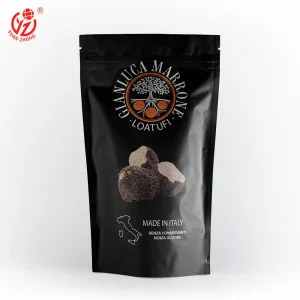
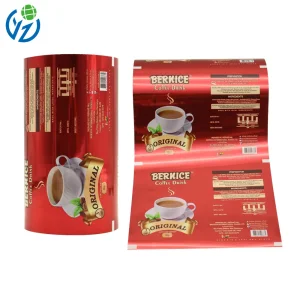
From aluminum foil barrier laminates to specialized roll stock and spout pouches, explore our full product catalog below.
 Yuanzhong Printing