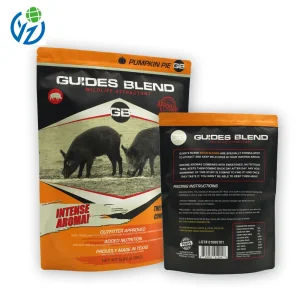
Exemplary barrier protection and pristine logo custom printing directly from our advanced production line.
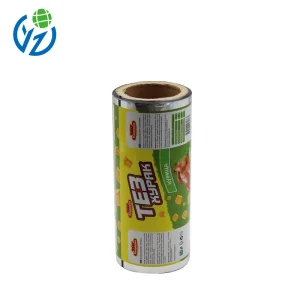
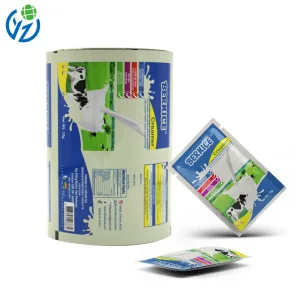
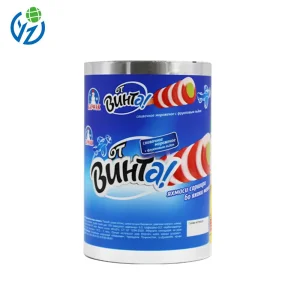
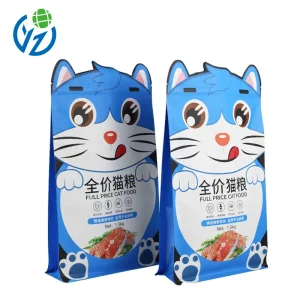
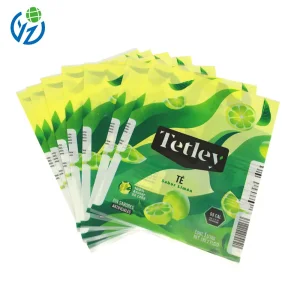
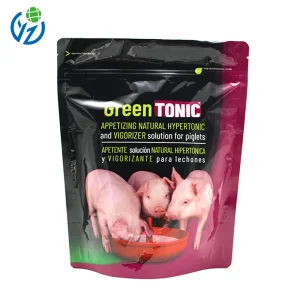
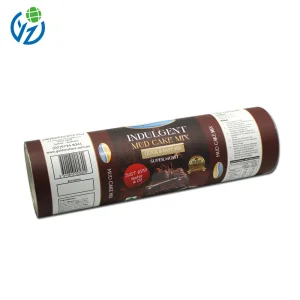
In the highly competitive global food industry, packaging is no longer merely a physical container meant to prevent physical damage or contamination. It serves as the primary touchpoint for consumer trust, brand differentiation, and strict regulatory adherence. For global purchasing directors, quality assurance managers, and product packaging designers, sourcing a reliable partner for Custom Logo On Food Packaging from China demands a deep understanding of material engineering, print calibration, and global food safety compliance.
Jieyang Yuanzhong Printing Co., Ltd. (operating as Yuanzhong Pack) has remained at the vanguard of the packaging and decoration printing industry since our establishment in 2001. Situated in the Jiedong District of Jieyang City, Guangdong Province, we possess over 20 years of technical printing expertise. Leveraging imported advanced infrastructure—such as the fully automatic Japan Komori printing lines—and maintaining an impressive monthly manufacturing capacity exceeding 240 tons, we satisfy high-volume requirements for multi-layered barrier roll stock and pouch formats across more than 30 countries.
Modern Google Search algorithms reward content that offers real-world metrics, structural clarity, and distinct engineering information over generic keywords. This article outlines the comprehensive mechanics of printing logos on food-contact materials. It explores chemical migration limits, color consistency systems, and high-efficiency manufacturing to support professional global buyers in making informed procurement decisions.
From a macroscopic commercial perspective, the food packaging industry faces a dual challenge: maintaining strict barrier properties while presenting crisp, high-fidelity brand iconography. Food preservation requires specialized materials designed to prevent gas transmission (Oxygen, Water Vapor, Carbon Dioxide) and block UV radiation. However, these multi-layer laminates often feature non-polar polymer surfaces that reject ink adhesion without proper chemical or physical treatment.
Furthermore, global markets demand strict adherence to zero-migration protocols. Inks and varnishes utilized to print logos on food wrappers must never compromise the organic purity of the product inside. Consequently, modern gravure printing requires food-grade, toluene-free, and methyl ethyl ketone (MEK)-free ink formulations. This ensures that the custom logo remains visually striking while meeting FDA, EU, and domestic food safety standards.
Delivering high-performance packaging infrastructure built on decades of manufacturing precision.
Featuring Japanese Komori fully automatic printing lines alongside high-speed rotogravure units that process large orders with extreme accuracy.
Maintaining a reliable monthly output of over 240 tons of flexible laminate film, guaranteeing short lead times for high-volume orders.
Providing compliant export logistics to over 30 countries, ensuring smooth customs clearance through comprehensive documentation.
Gravure printing occupies a critical position in packaging and printing because of its thick ink layers, high saturation, and stable output speeds.
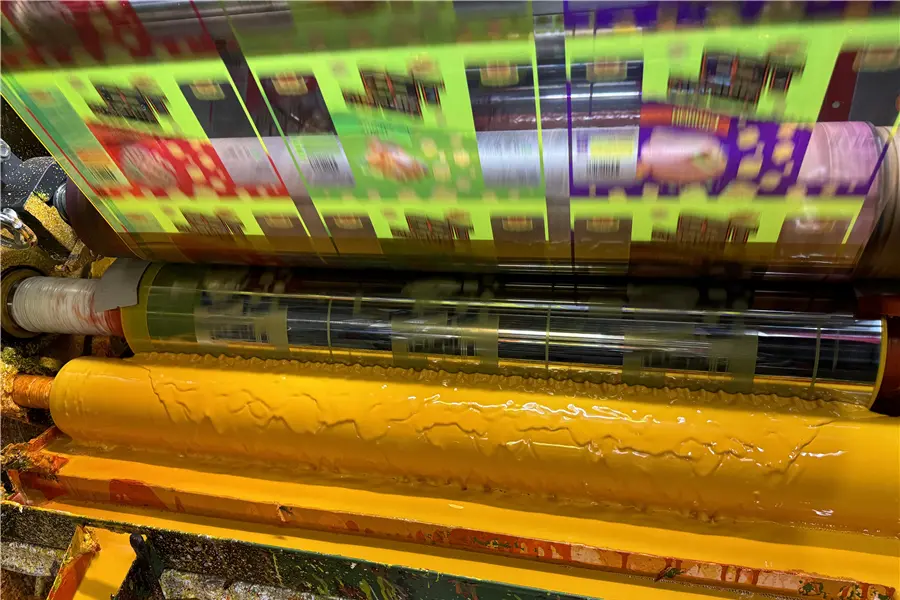
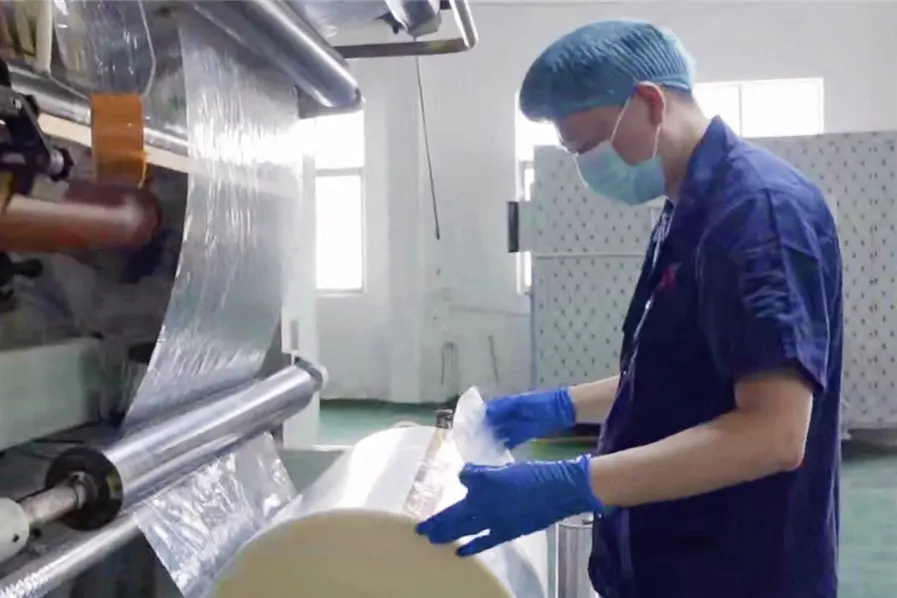
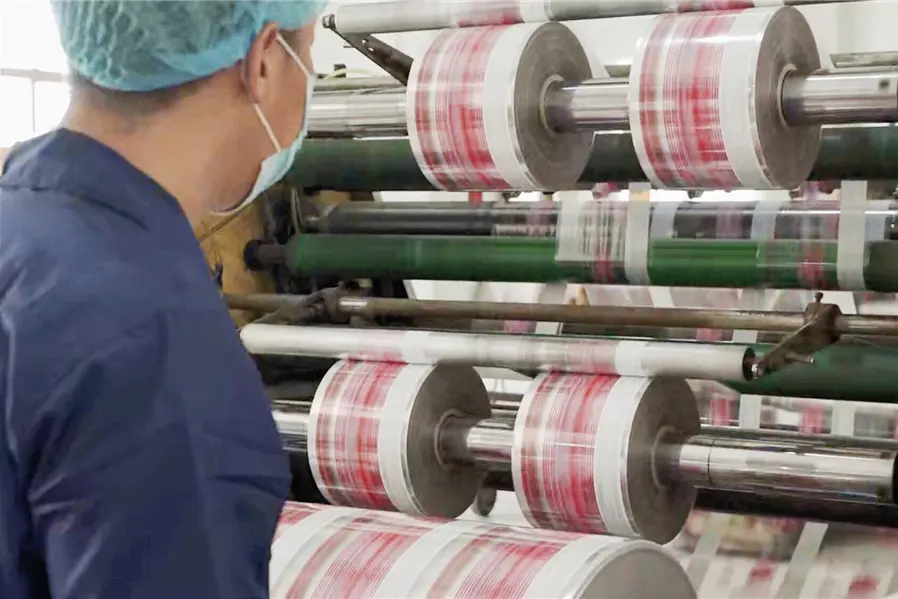
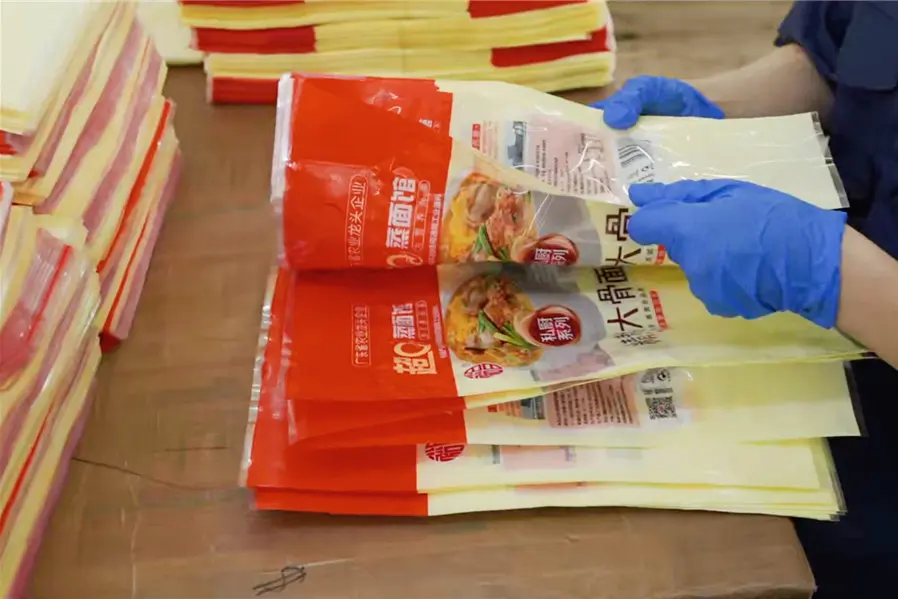
Ensuring a custom logo retains its visual appeal over a package's shelf life requires precise surface energy modification and material engineering. Standard polymers like Polyethylene (PE) and Polypropylene (PP) exhibit low surface tension. This makes them naturally resistant to ink wetting and adhesion.
To overcome this barrier, Yuanzhong Pack utilizes high-precision inline Corona Discharge treatment units. By bombarding the plastic film substrate with high-frequency electrical discharges, we increase the material's surface energy to a minimum of 38 dynes/cm. This ensures permanent chemical bonding with our food-safe polyurethane inks, preventing peeling, color fading, or logo distortion.
Unlike flexography or digital printing, rotogravure printing utilizes copper-plated steel cylinders engraved with microscopic cell patterns. This configuration permits direct ink transfer to the film under high pressure. The result is a robust, thick ink deposit (typically 1.5 to 3.0 microns) that delivers exceptional color density, outstanding optical depth, and precise reproduction of fine vector logos.
Food contact materials must satisfy strict regional laws to ensure safety and avoid import delays. As a global exporter, Jieyang Yuanzhong Printing guarantees that all custom-printed barrier packaging complies with international regulatory frameworks:
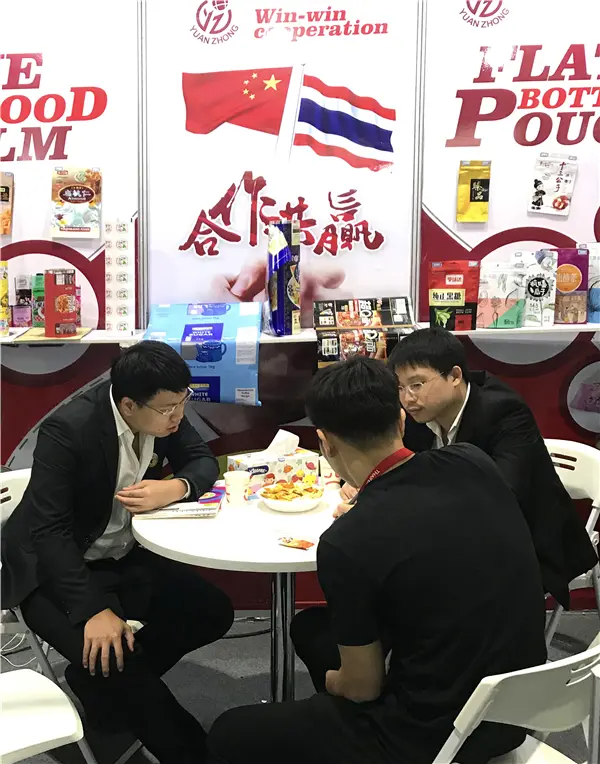
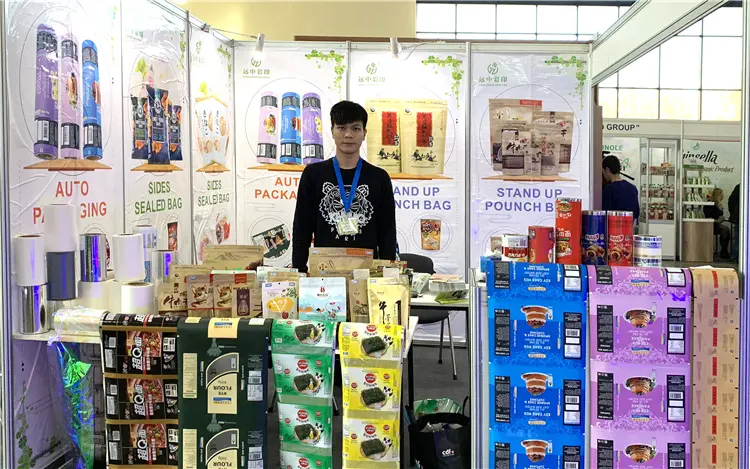
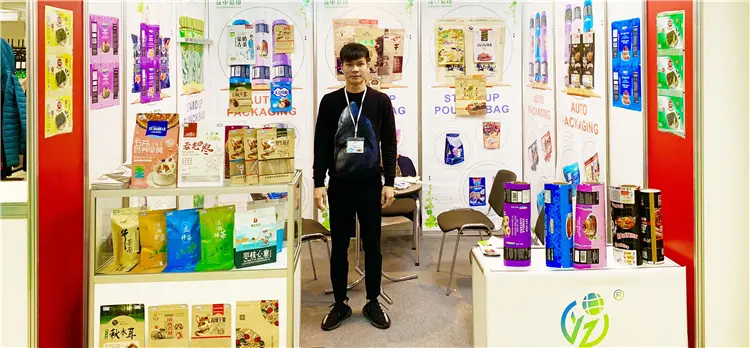
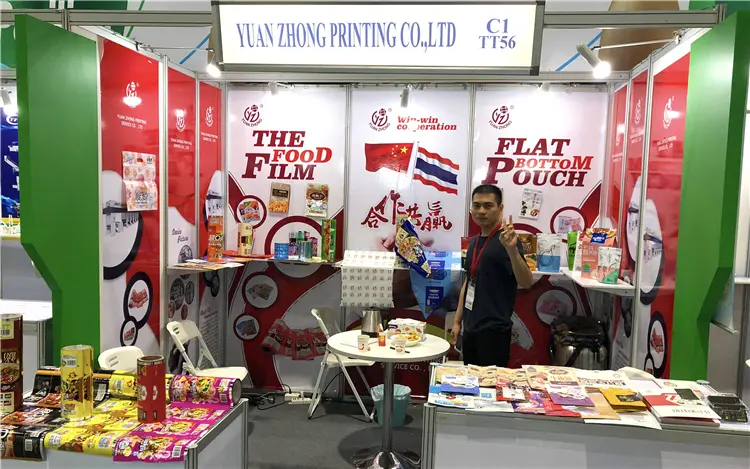
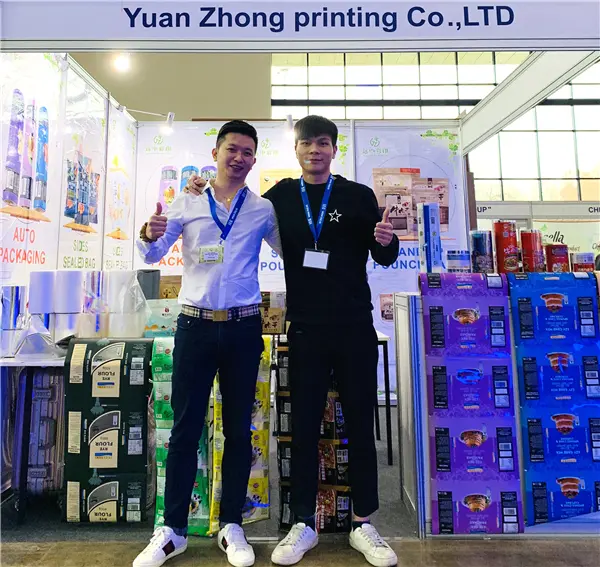
Exploring the World Through Exhibitions: A Journey Across More Than 10 Countries to Connect with Partners Globally.
Modern food packaging relies on laminated barrier sheets containing multiple specialized layers. The exterior layers are selected for print receptivity and thermal resistance, while the interior layer serves as a barrier, and the innermost layer enables thermal sealing. Typical barrier laminate constructions include:
| Material Structure | Key Target Benefit | Common Packaging Format |
|---|---|---|
| PET / AL / PE | Complete oxygen, light, and moisture barrier. Extended shelf-life. | Milk powder, ground coffee, dehydrated proteins. |
| BOPP / VMPET / PE | High gloss aesthetic appeal combined with moderate barrier shielding. | Potato chips, retail snack pouches. |
| PET / NY / PE | Excellent puncture resistance and structural integrity. | Liquid spouted pouches, pet food bags. |
| Kraft Paper / VMPET / PE | Natural, organic tactile finish with good internal barrier. | Artisan coffee bags, loose leaf tea pouches. |
Integrating a custom logo onto food packaging requires close alignment between graphic designers and print technicians. Below is our standard blueprint to ensure color accuracy and design fidelity:
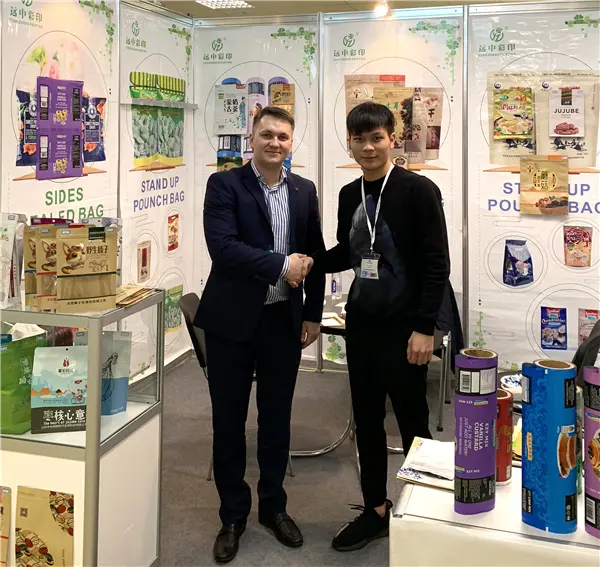
Cooperating with More Than 20 Brands: A Testament to Our Long-Term Commitment to Excellence and Integrity.
The packaging industry is transitioning toward eco-friendly and smart design solutions. To meet this evolving demand, Yuanzhong Printing is actively developing green laminates. These include biodegradable polylactic acid (PLA) coatings and recyclable mono-material Polyethylene (PE) laminates. These structures maintain reliable barrier properties while simplifying the recycling process.
Additionally, we specialize in integrating QR codes and thermal indicators into custom designs. These features enable brands to share batch history, allergen information, and authenticity verification directly with consumers.
Addressing standard technical queries from global sourcing and QA departments.
We utilize low-migration polyurethane inks combined with high-temp drying ovens. This process extracts residual solvents below the strict limit of 10mg/m². Regular gas chromatography-mass spectrometry testing ensures that no volatile organic compounds remain in the packaging materials.
Our standard MOQ depends on the bag dimensions and film thickness, typically ranging from 10,000 to 20,000 bags per design. For roll films, our minimum is 500 kilograms per run. Please contact our team with your exact specifications for a detailed quote.
Yes. We offer matte, glossy, and metallic finishes. We can also apply spot-gloss varnish over matte surfaces to create contrast and draw attention to your brand logo.
Yes. Our laminated rolls are engineered with controlled coefficients of friction (COF). This ensures smooth operation on high-speed Form-Fill-Seal (FFS) lines, minimizing machine downtime.
We maintain strict quality control throughout production. Each batch undergoes tensile strength, heat seal strength, puncture resistance, and oxygen transmission rate (OTR) tests in our quality control laboratory.
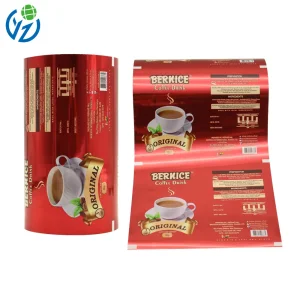
Browse our advanced flexible packaging line, designed to maximize shelf life and highlight your brand.
 Yuanzhong Printing