Choosing the right Printed Films is not a simple matter of selecting the brightest finish or lowest price. The film must protect the product, run smoothly, and support the brand’s visual promise.
Packaging educator Walter Soroka defines packaging as “a coordinated system of preparing goods for transport, distribution, storage, retailing, and end use.” This principle applies directly to Printed Films. A snack pouch may need high oxygen and moisture resistance. A frozen-food bag must tolerate low temperatures and rough handling. A stand-up pouch also needs reliable seals, accurate registration, and enough stiffness for shelf display.
Small details matter. A glossy surface can hide weak seal performance. A thicker structure may improve durability but increase material use. PET, BOPP, PE, and metallized films each provide different balances of clarity, strength, barrier protection, and printability. Ink adhesion must match the substrate. Lamination must withstand filling, transport, and storage.
There is no universal best film.
Experienced converters usually review the complete packaging line before recommending a structure. They examine machine speed, sealing temperature, humidity, product oils, filling pressure, and distribution distance. They also consider recycling goals and local collection systems, although these decisions are often less straightforward than marketing claims suggest.
A thoughtful selection process begins with product risks, not appearance. Samples should be tested under realistic conditions, including abrasion, heat, cold, and extended storage. Even then, results may reveal uncomfortable compromises. That is useful. Reliable Printed Films are chosen through evidence, practical experience, and a willingness to question the first attractive option.
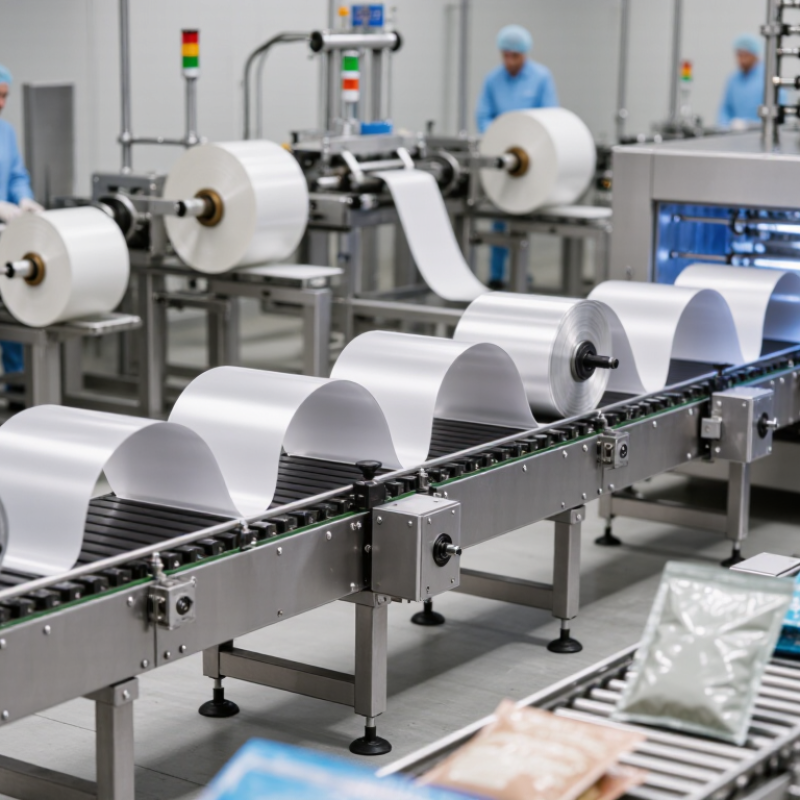
Printed film is more than a colorful outer layer. It is a working surface. It identifies the product, carries instructions, and shapes first impressions. In flexible packaging, its ink and substrate must survive filling, sealing, transport, and storage. A vivid image means little if moisture dulls it or heat distorts it. The film must communicate clearly while supporting the package’s physical performance.
During packaging trials, I compare print adhesion, rub resistance, seal temperature, stiffness, and barrier needs. A small test matters: slide a printed pouch across a carton, then inspect the lettering under bright light. If the ink scratches easily, handling damage may expose important information. If the film curls near the seal, production speed and closure quality can suffer. These checks connect design decisions with factory reality. They also reveal uncomfortable compromises. A highly glossy surface can improve shelf impact, yet reflections may reduce readability. I have sometimes favored attractive samples too quickly. That judgment needed more testing.
The right printed film depends on the package’s actual role. A film for dry goods may prioritize sharp graphics and easy handling. A film for oily or moisture-sensitive contents may need stronger barrier protection and stable ink performance. Color accuracy should be checked against approved proofs, lighting conditions, and the final printing process. Technical data sheets help, but they cannot replace line trials. Small text, batch details, and disposal guidance deserve the same care as the main image. Under line lighting, even a small registration shift can change how a disposal instruction is read.
Start with the product itself. A dry snack, oily sauce, and frozen meal need different film structures. Moisture, oxygen, light, grease, and aroma can all affect quality. A crisp product may lose its texture when water vapor passes through the package.
Consider the real distribution environment. Will the pack face heat, refrigeration, sunlight, or rough handling? A film with strong puncture resistance can prevent leaks during transport. Reliable heat seals matter too, especially when the package contains liquids or fine powders. The printing layer should remain sharp and firmly bonded after sealing. Ink migration and material compatibility also require documented testing for the intended use.
Shelf life should guide the barrier level. Higher performance is not always better. An unnecessarily complex structure may increase cost and complicate recycling decisions. That trade-off deserves a careful review. In practical trials, teams should test filled packs under expected temperature and humidity conditions. Check seal strength, oxygen transmission, moisture transmission, color stability, and odor retention.
Small details matter. A package may look perfect on day one. It may still fail after several weeks. Product testing should include drops, compression, and repeated opening when relevant. Allow time for improvement. Early assumptions are often wrong. Select a printed film only after the product, protection target, and shelf-life evidence agree.
Choosing printed film starts with the product, not the artwork. Polyethylene offers flexibility and reliable heat sealing; polypropylene can provide stiffness and a crisp display surface. Polyester often adds strength and dimensional stability. For oxygen- or moisture-sensitive foods, a multilayer structure may pair these qualities with a barrier layer. More layers can improve protection, but they may complicate sorting and recycling. There is no universal best film. Test the actual product, seal, and storage conditions.
Printing must fit both the structure and the run. Flexographic printing suits repeat jobs and established workflows; rotogravure can deliver consistent detail at high volumes. Digital printing supports shorter runs and faster artwork changes, though unit costs and substrate compatibility need checking. Smithers’ report The Future of Digital Print for Packaging to 2029 projects the market will grow from $22.0 billion in 2024 to $36.9 billion by 2029. Scale is changing. The Flexible Packaging Association reported U.S. flexible packaging sales of $42.9 billion in 2022, underscoring the format’s commercial reach. Still, market growth does not choose a film for you. One caveat: laboratory barrier figures can mislead if seals, folds, or humidity differ in production. Run a small print-and-pack trial before committing.
How to Choose the Right Printed Films for Packaging?
A film should protect the product through real storage and shipping conditions. For roasted nuts, oxygen control can help slow rancidity; for moist foods, moisture resistance may matter more. Match barrier targets to the product’s shelf life, not just a supplier’s specification sheet. Ask for test results under relevant temperature and humidity conditions. Then check sealing performance on your actual packaging line. A film that performs well in a lab may wrinkle or seal inconsistently at production speed.
Sustainability involves trade-offs. Thinner film can reduce material use, but only if it still prevents damage and spoilage. Consider whether the full structure, including inks and adhesives, fits local recycling systems. Request clear material details rather than relying on a broad recyclability claim. Shelf life matters, too: discarded product can outweigh modest packaging savings. No option is perfect. That deserves a second look.
Compliance needs the same practical attention. Confirm the film is suitable for its intended food contact, and request relevant declarations, migration test records, and traceability documents. Requirements vary by market and product type, so check the rules where the package will be sold. Keep records of specifications and approved artwork, then review them when materials change. It can feel tedious. It prevents avoidable surprises.
Compare oxygen barrier performance alongside sustainability and compliance needs.
Lower oxygen transmission rate (OTR) means a stronger oxygen barrier. Values shown are approximate representative figures for uncoated films around 25 µm thick at 23°C under dry conditions; actual results vary by grade, thickness, humidity, and test method. EVOH barrier performance can decrease substantially at high humidity. Balance barrier needs with package structure, local recycling options, and food-contact requirements in the target market.
Choosing printed films starts with testing, not appearance. A vivid sample can still fail on a fast packing line. Run small trials using the intended ink, adhesive, sealing temperature, and machine speed. Check seal strength, puncture resistance, haze, ink adhesion, and oxygen or moisture barrier. Record results after production and storage. A film that performs today may weaken after heat exposure. Test the actual package shape, too. Flat sheets can hide sharp-corner failures.
Cost review should include more than price per kilogram. Calculate waste, setup time, rejected rolls, energy use, and line interruptions. A slightly thinner film may lower material cost, yet create wrinkles or weak seals. That saving can disappear quickly. Ask for samples before approving volume. My trial plans are not always perfect; humidity and operator habits can change results. Test twice. Repeat critical checks under realistic conditions. Use a simple cost-per-accepted-pack figure, not a catalog price alone.
Supplier review needs evidence and clear communication. Request technical data sheets, lot traceability, test methods, and consistent sample labeling. Confirm production capacity, lead times, change-control procedures, and complaint response. Ask how the supplier investigates an off-specification roll. Specific answers matter. Generic promises do not. Review compliance documents for the intended market and application, then verify current requirements independently. A capable supplier should discuss limits honestly. If every answer sounds certain, look closer. Packaging decisions improve when test records, costs, and supplier behavior are judged together.
Start with the product, not the artwork. Dry snacks, oily sauces, and frozen meals need different protection. Small tests matter.
Moisture, oxygen, light, grease, and aroma can change product quality. A crisp snack may soften when water vapor enters the package.
Consider heat, refrigeration, sunlight, drops, and compression. Strong puncture resistance can reduce leaks. Reliable seals matter for liquids and powders.
No. More layers may improve barrier performance, strength, or sealing. They can also increase cost and complicate recycling. The simplest structure may be better.
Test filled packages under expected temperature and humidity. Measure seal strength, oxygen transfer, moisture transfer, color stability, and odor retention.
Flexographic printing can suit repeat production. Rotogravure can support detailed, high-volume work. Digital printing may help with short runs and frequent artwork changes.
Not always. Seals, folds, humidity, and production speed can change results. Run a small print-and-pack trial before making a large commitment.
Thinner film can reduce material use, but only if it still prevents damage and spoilage. Check the complete structure, including inks and adhesives, against local recycling systems.
Request food-contact suitability information, migration test records, material specifications, and traceability documents. Keep approved artwork and review records when materials change.
Do not trust appearance alone. A package may look perfect on day one and fail weeks later. Initial assumptions can be wrong.
Choosing the right Printed Films is essential for creating packaging that protects products, communicates brand information, and supports efficient production. The selection process should begin by defining the film’s role, including its visual impact, sealing function, and contribution to package strength. Next, consider the product’s sensitivity to moisture, oxygen, light, heat, or physical damage, as well as the required shelf life and distribution conditions. These factors help determine the most suitable material, thickness, multilayer structure, and printing method.
A complete evaluation should also include barrier performance, recyclability, material efficiency, and applicable packaging requirements. Samples and laboratory testing can confirm seal strength, durability, print quality, and resistance to handling or storage conditions. Finally, compare total costs, production capabilities, lead times, technical support, and quality consistency among potential suppliers. By balancing performance, sustainability, appearance, compliance, and cost, businesses can select Printed Films that meet product needs while delivering reliable packaging results.

Yuanzhong Printing