Choosing the best Plastic Bag With Logo supplier requires more than comparing prices on a product page. A reliable partner should understand packaging materials, printing methods, bag strength, and brand presentation. The right supplier can explain whether recycled polyethylene, compostable film, or standard plastic suits a specific product and market. Vague answers deserve caution.
Real purchasing experience shows that small details often reveal supplier quality. Request physical samples before approving a large order. Examine the handle seams, film thickness, logo sharpness, color consistency, and odor. Place a few bags under realistic weight. A sample may look excellent while the production batch performs differently. This is where careful communication matters. Ask about production controls, inspection stages, defect handling, and replacement policies. Trust grows through clear evidence, not confident promises.
A professional supplier should provide accurate specifications, transparent quotations, and practical delivery estimates. Certifications can support credibility, but they should be verifiable and relevant to the material. Experienced suppliers also explain artwork requirements, minimum order quantities, packaging methods, and storage conditions. Still, no supplier is perfect. Even experienced buyers can overlook regional packaging requirements or underestimate delivery delays. That weakness deserves attention, not embarrassment. Compare documented performance, customer feedback, sample results, and response speed before deciding. A suitable Plastic Bag With Logo supplier should protect more than the product; it should support consistent branding, responsible purchasing, and long-term business reliability.
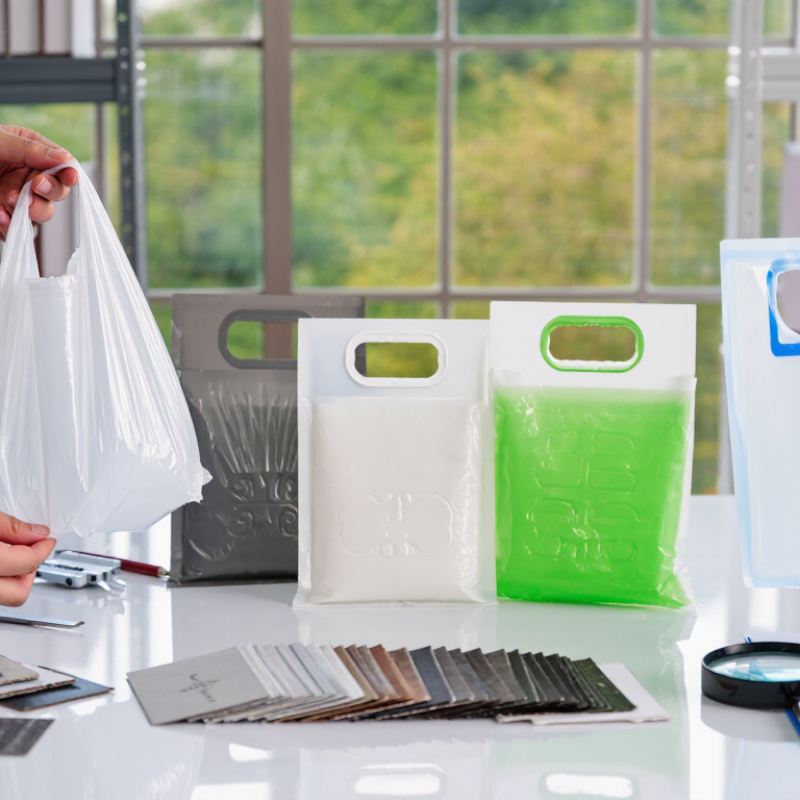
Choosing a plastic bag with logo starts with performance, not artwork. In real purchasing work, load testing often exposes weak assumptions. Estimate the product’s weight, shape, and movement during carrying. A bag holding two kilograms of boxed goods needs different strength from one holding clothing. Consider sharp corners, moisture, and repeated handling. A rough loading test is useful. Fill a sample, lift it, and inspect the seams and handles. Do not trust appearance alone.
Thickness affects puncture resistance, flexibility, cost, and user experience. A thicker bag is not automatically stronger. Material quality, sealing temperature, and production control also matter. Ask the supplier for measured thickness, load-test results, and acceptable variation. Size should leave enough room without excessive unused film. Measure the product diagonally, then allow space for closure and movement. Handle strength deserves separate testing. Hold the filled bag for several minutes, swing it gently, and check stretching around the handle openings. I once underestimated handle strain because the empty sample looked excellent. That mistake changed our testing routine.
Tips: Request production samples, not only digital specifications. Test warm and cold conditions when storage varies. Record the load, holding time, and failure point. If the sample barely passes, redesign the bag. Reliability should not depend on perfect handling.
| Bag Application | Typical Load Requirement | Suggested Thickness | Common Finished Size | Handle Strength Target | Recommended Material Structure | Key Performance Checks | Supplier Specification to Request |
|---|---|---|---|---|---|---|---|
| Light Retail Shopping | Up to 3 kg | 35–50 microns | Approx. 280 × 150 × 420 mm | At least 8 kgf after conditioning | LDPE or HDPE; reinforced die-cut or loop handle | Seal integrity, handle tear resistance, print adhesion | Film thickness tolerance of ±10%, handle test results, and artwork proof |
| General Grocery Carry Bag | 3–8 kg | 50–75 microns | Approx. 320 × 180 × 500 mm | At least 12 kgf after conditioning | Medium-density PE or co-extruded PE film | Drop test, top-load test, bottom-seal strength, odor assessment | Nominal load rating, seal design, and test method used for the rating |
| Heavy-Duty Grocery or Hardware Bag | 8–15 kg | 75–120 microns | Approx. 400 × 200 × 600 mm | At least 18 kgf after conditioning | Heavy-gauge LDPE or multi-layer co-extruded PE | Repeated lifting, puncture resistance, seam strength, handle elongation | Material structure, minimum thickness, and documented load-test procedure |
| Garment or Apparel Bag | Up to 5 kg | 40–70 microns | Approx. 350 × 100 × 500 mm | At least 10 kgf after conditioning | Clear LDPE or co-extruded PE with smooth surface | Clarity, tear propagation, hanger-hole strength, print scuff resistance | Transparency requirement, opening style, and print durability specification |
| Mailing or E-Commerce Bag | Up to 5 kg | 60–100 microns | Approx. 300 × 400 mm plus flap | At least 12 kgf at the closure area | Co-extruded PE with tamper-evident adhesive flap | Closure bond, puncture resistance, tear initiation, moisture protection | Adhesive aging data, flap dimensions, and closure-strength results |
| Produce or Food-Contact Bag | Up to 3 kg | 20–50 microns | Approx. 250 × 150 × 400 mm | At least 6 kgf after conditioning | Food-contact compliant LDPE or HDPE | Seal quality, odor, migration compliance, and film cleanliness | Food-contact declaration, ink suitability, and applicable compliance documents |
| Reusable Shopping Bag | 8–15 kg | 80–150 microns | Approx. 380 × 150 × 450 mm | At least 20 kgf after repeated-use testing | Heavy-duty LDPE, HDPE, or recycled-content PE subject to requirements | Multiple-cycle lifting, handle attachment, abrasion, and seam performance | Target reuse cycles, recycled-content percentage, and handle construction details |
| Waste or Utility Bag | 5–20 kg depending on volume | 30–100 microns | Approx. 450 × 700 mm for a medium-large sack | At least 10–20 kgf, depending on closure design | LDPE or blended PE with optional gussets | Leak resistance, puncture resistance, stretch, and drawstring or tie strength | Bag volume, maximum fill weight, gusset dimensions, and leakage-test criteria |
| Custom Logo Printing | Must match the selected bag application | Use the minimum thickness that meets the load test | Confirm width, height, gusset, and handle clearance | Printing must not reduce handle or seal strength | Flexographic or rotogravure printing on compatible PE film | Ink adhesion, color consistency, registration, rub resistance, and odor | Color references, print area, artwork file requirements, and approval sample |
Estimate the product’s weight, shape, and movement during carrying. A two-kilogram load needs careful testing. Inspect seams, handles, and sharp-corner contact after filling.
No. Thickness affects puncture resistance, flexibility, cost, and handling feel. Material quality and sealing control also matter. Ask for measured thickness and acceptable variation.
Fill the bag and hold it for several minutes. Swing it gently, then inspect stretching around the handle openings. Empty samples can look excellent. That can mislead you.
Measure the product diagonally, then allow space for closure and movement. Avoid excessive unused film. A loose bag may feel wasteful and unstable.
Request the resin type, thickness, dimensions, tensile strength, and intended use. Different polyethylene types offer different softness, tear resistance, and stretch. Do not guess from appearance.
Ask whether the percentage means post-consumer, post-industrial, or blended content. Request batch records and supporting test reports. “Eco-friendly” alone proves very little.
Request a declaration of compliance and migration test results. Check inks, adhesives, additives, and the finished printed bag. Raw film documentation is not enough. Details matter.
Compare a physical sample with the approved color reference in daylight. Check red, dark blue, thin lines, and small text. Look for streaks, pinholes, and weak coverage near seams. Screens can deceive.
Rub the printed area with a dry cloth, then use light moisture. Fold the bag repeatedly around the design. Check smearing, fading, cracking, and ink transfer. A beautiful sample may still fail.
Choosing the best Plastic Bag With Logo supplier starts with matching the bag to your practical requirements. Define the expected load, thickness, dimensions, and handle strength before requesting samples. Confirm the material type, such as suitable PE grades, recycled content, and food-contact compliance when relevant. Printing should also be assessed carefully, including color accuracy, image resolution, coverage, registration, and ink durability under handling, moisture, and storage conditions.
A reliable supplier should demonstrate sufficient production capacity and provide clear information about minimum order quantities, daily output, lead times, and defect rates. Pricing should be reviewed beyond the unit cost by considering certifications, material waste, packaging, shipping, and delivery terms. Sustainability is equally important, so compare recycled-material options, efficient production practices, and transparent documentation. By evaluating performance, materials, printing, capacity, pricing, and environmental responsibility together, buyers can select a supplier that offers consistent quality, dependable delivery, and suitable long-term value.

 Yuanzhong Printing